

Make your MTB upgrade count
There are bike components that are easily replaceable, don't have to cost a fortune, and yet have a huge impact on your ride.
You might know that there are 3 contact points connecting the rider to the bike – handlebars, saddle, and pedals. In today's article, we'll look at the first two, which probably contribute the most to overall comfort when riding off-road. By upgrading them, we can achieve the desired characteristics in terms of riding position, which also helps eliminate uncomfortable sensations.Let's go step by step and illustrate the basic features using products from the PRO brand. Their range includes a wide selection of handlebars, stems, grips, and saddles, and more.
How to choose the right MTB handlebars
Choosing handlebars for your mountain bike can significantly impact your comfort, bike handling, and overall riding experience. Handlebars aren't just about design – their dimensions, shape, and material directly affect how you feel on the bike. What are the basic features you should consider when choosing MTB handlebars?
Handlebar width
- Narrower handlebars (700–740 mm) - suitable for XC (cross-country), where efficiency and low weight are the main goals.
- Wider handlebars (760 mm and more) - provide better stability and control during descents (enduro, trail, downhill).
Wider handlebars improve handling in technical terrain but can be less practical on narrow trails. It's also very important to consider factors like height, or rather shoulder width and arm length. Naturally, more robust riders will appreciate a wider grip, while slimmer riders might feel unnecessarily "stretched out." The advantage is that wider handlebars can almost always be cut down; the opposite is not possible...

Rise
Defined in millimeters (e.g., 0 mm, 20 mm, 35 mm).- Flat (0 mm) - for a more aggressive position, suitable for XC.
- High-rise (20 mm+) - for a more comfortable riding position and especially for technical disciplines (enduro, trail), where a greater rise provides a sense of confidence on steep sections.


Sweep – handlebar curvature
- Backsweep - curvature backward (usually 7–9 degrees).
- Upsweep - curvature upward (usually 0–5 degrees).
Greater backsweep reduces tension in the wrists and shoulders, resulting in a more comfortable riding position. Conversely, during aggressive riding in technical terrain, it might slightly reduce the feeling of "control" over the front wheel and also decrease leverage when turning.
The advantage of greater upsweep is a more natural outward elbow position, which improves an aggressive downhill stance, but on the other hand, it can be uncomfortable for some during longer climbs. Combined with a high rise, it can ultimately create an overly upright riding position.

Material
Aluminium:- Affordable.
- Good durability and slightly higher weight.
Carbon:
- Lighter and often better at dampening vibrations.
- More expensive and slightly more susceptible to damage in a crash.

The choice itself is heavily influenced by preferences. If you don't require the absolute lowest weight or extra vibration damping, aluminium models will serve you excellently. Moreover, they are also suitable for rougher handling. The weight difference between carbon and aluminium for similar types is usually about 60-80 grams.
For XC, opt for one of the "flat" models; for more technical riding, don't be afraid to try "riser bars," and your confidence might significantly increase.
Handlebar diameter
It's very important to check the diameter of your stem (clamp area) and choose handlebars accordingly. Of course, if you're selecting an entirely new cockpit, the diameter can also influence the resulting characteristics:- 31.8 mm – older, but still common standard.
- 35 mm – newer standard, aiming to provide more stiffness, especially for gravity disciplines.

Grips as an important component
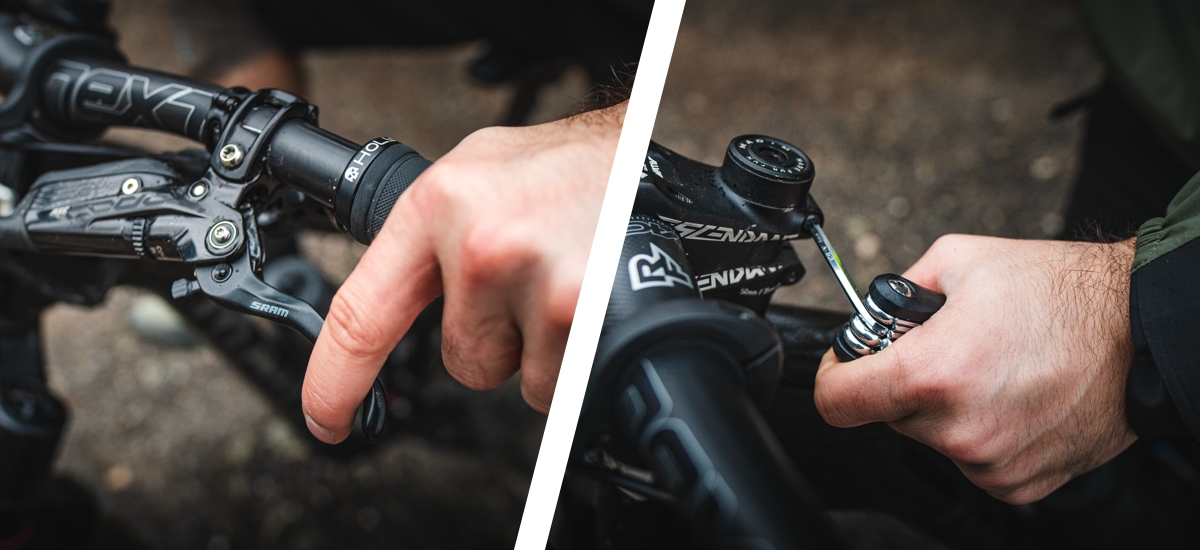
You wouldn't believe what a difference well-chosen grips can make to your riding experience, as they form the primary contact with the rider. Don't be afraid to experiment a bit; if your current ones aren't comfortable, you essentially have nothing to lose given their price.And a tip from us: If you still feel a lot of pressure during longer rides and your riding position is already fine-tuned, look for ergonomic models with a widened (flattened) outer part – they might be exactly what you've been looking for.


How to choose the right stem?
Choosing the right stem is equally crucial for comfortable and efficient riding – it affects your position on the bike, steering precision, and overall comfort. The PRO brand offers stems for various styles – from cross-country to trail and enduro.Below, we'll look at what features to consider and how they impact the riding experience itself. This is in addition to the diameter, which we already discussed with handlebars earlier in the article.

Stem Length
- Shorter (≤ 60 mm) – offers quicker, more aggressive steering.
- Longer (70–90 mm) - provides a sportier character, while still maintaining the bike's trail capabilities.
- Longer (100 mm+) - primarily serves when you need to significantly extend your riding position.
It must be said that stem length itself has changed significantly in recent years with the advent of modern bike geometry, especially with longer frame triangles. Even in modern XC, you will rarely find stems longer than 90 mm.
However, by changing it, you can fine-tune your riding position towards the desired characteristics. Be careful with large jumps, which can have a significant impact on the bike's overall geometry.

Angle
Zero-degree stems maintain the natural handlebar height. Conversely, those with a rise allow you to increase/decrease the aggressiveness of your riding position, even if you can no longer adjust spacers. For example, the LT model offers versions with angles of ±6, ±17, and ±35 degrees. If you're still "experimenting" with your riding position, then an adjustable stem with a range of -30 to +40 degrees is an excellent tip.Regarding material, your choice is very simple, as it's almost always an aluminium alloy. Carbon is mainly used in integrated cockpits, i.e., when handlebars and stem are combined.
An interesting feature and also a novelty in the PRO brand's offering is the combination of PRO Tharsis EVO handlebars and a PRO Tharsis stem. Besides perfectly matching and still being customizable, they also offer integrated cable routing, which can significantly help "tidy up" the cockpit and create a visually appealing whole. And some will also appreciate the option to perfectly fine-tune their cockpit with their bike using high-quality decals.


Saddles for MTB
Choosing a suitable saddle can be a very complicated process, but the PRO brand has simplified it quite a bit when looking at the off-road category. The basis is a shortened version of saddles called Stealth Offroad. Their curved shape at the rear provides support, and the significantly anatomically refined saddle nose allows for comfortable pedalling even on extra steep sections.All of this is supported by ample padding, and a cut-out in the central part significantly reduces pressure on the sensitive nerve area. For a sportier riding approach, the Performance version is suitable. Both are available in 142 or 152 mm widths. You'll love these saddles, especially if you prefer a more sporty position.


If you're more drawn to technical terrain for trail or enduro, look at models like the MSN 1.3 Enduro. Its design is suitable for long climbs and puts you into a neutral position. High durability is a matter of course.
It's safe to say that one or the other model will most likely suit you; you just need to choose your preferred style and measure your sit bone width.


savings Shimano 105 RD-R7000-GS rear derailleur, 11-speed, long cage
45.99 €
savings
RRP 75.99 €
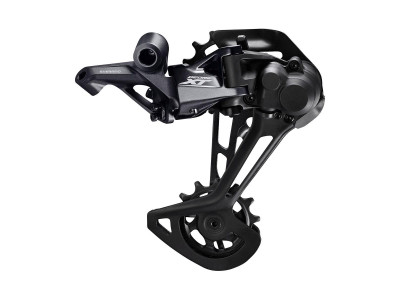
savings Shimano Deore XT RD-M8100 rear derailleur, 12-speed, super long cage (SGS), Shadow+
79.99 €
savings
RRP 139 €

 arrow_outward
