





































































XC, TR, AM, EN, DH - What's the difference?
Let's make sense of all the MTB disciplines.
Mountain biking has undergone significant development over the past few decades. Some disciplines are older, while others didn't even exist a few years ago.In this article, we'll simply categorise the disciplines, launching a series that will help beginners in the field of MTB.
XC: Cross-Country
Riding style primarily focused on longer routes and rider performance. The trails include fast flat sections, moderate and steep climbs, sometimes even in more challenging technical terrain. They might also involve rooty and rocky sections.The descents are less demanding, comparable to simple forest paths.
It's worth noting that at the XC World Cup, the courses have become much harder in recent years. The terrain on professional race tracks is designed to challenge riders and showcase their ability to navigate technical sections at speed.

Bikes are lightweight to allow riders in this discipline to pedal uphill easily and quickly. For more expensive models, bike frames are made of carbon, while more affordable ones are aluminium. A quality aluminium frame can also be super lightweight – a feature that enables cyclists in this discipline to ride long distances.
These bikes usually have 29-inch wheels and the option to mount multiple bottle cages (as long-distance riding is expected). Suspension usually features a lockout option, which provides the cyclist with better efficiency and comfort when pedalling uphill.
Cross-country bikes are available as both full-suspension and hardtails – with a rigid rear triangle. Suspension travel for the fork (front) and rear shock (rear) typically ranges from 80 to 120 mm. The geometry of these bikes contributes to efficient pedalling and excellent power transfer.


A new trend is bikes in a similar category – down-country – which in some cases have more travel and a more aggressive geometry for downhill riding.
- Wheels – predominantly 29-inch
- Material – more affordable aluminium as well as premium carbon
- Lowest possible bike weight
Trail (TR)
The word 'trail' refers to forest paths ridden on mountain bikes. The description of this bike category is closely related to this.It's a discipline where riding is a combination of speed and more technical sections, where the cyclist navigates uneven terrain (mostly natural features) such as roots and rocks.
The size of these obstacles reflects the difficulty of the trails. These are often marked on maps by colour (with most markings, green indicates the easiest trail and black the most challenging). Trails include both climbs and descents.
On the trails, you can also find smaller man-made features, such as berms and jumps.


Precisely because of these uneven surfaces, trail bikes have more suspension travel and a more aggressive bike geometry (for stability), which nonetheless provides the rider with excellent climbing capabilities. Trail bike travel ranges from 120 to 150 mm (both front – on the suspension fork, and rear – rear shock travel).
Trail bikes also usually feature a lockout option, bottle cage mounts, and in some cases, hidden storage (for example, for a snack bar or an inner tube), or even integrated tools (multi-tool).
- Wheels – predominantly 29-inch
- Material – more affordable aluminium as well as premium carbon
All Mountain (AM)
Bikes for this discipline are designed for almost all surfaces, with versatility being their proudest feature. This bike classification is used a bit less than in the past, but serves as a transition between trail and enduro bikes (which we'll cover below).Riding typically takes place on more challenging trails, with their difficulty particularly evident on descents. Often, you'll encounter more difficult technical sections, larger obstacles, and man-made trail features – berms and various types of jumps.


These bikes have longer travel, ranging from 140 to 160 mm both front and rear. The geometry is slightly more aggressive, as riding on more demanding trails is expected. Shared features with trail bikes include the lockout option, bottle cage mounts, and hidden storage.
- Wheels – predominantly 29-inch
- Material – more affordable aluminium as well as premium carbon
Enduro (EN)
The enduro discipline (be careful not to confuse it with motorcycle enduro) was developed approximately 3 decades ago. Its name comes from the word 'endurance'.This discipline emerged as a new race format where cyclists ride down very challenging trails, and then must pedal back uphill under their own power. This approach specifically demands the aforementioned endurance.
Riders complete several stages or laps consecutively, which increases the discipline's difficulty. The courses feature challenging and large natural obstacles, and in some cases, difficult man-made features.
Bikes must be designed to withstand fast and demanding descents, while also allowing for uphill pedalling, as this is also a key aspect of the discipline.


Bike travel ranges from 150 to 180 mm, and in some cases, up to 190 mm. Compared to other categories, the geometry of these bikes is very aggressive; they have a longer wheelbase, which contributes to stability. Pedalling uphill on these bikes is more challenging, as they are also built for serious descents.
- Wheels – predominantly 29-inch
- Material – more affordable aluminium as well as premium carbon
- Option to attach a bottle cage and hidden storage (on some models)
Downhill (DH)
This is strictly downhill riding. In this discipline, it's all about the descent, with cyclists typically reaching the top of the hill via a chairlift. The courses are extremely demanding, featuring large obstacles, big jumps, and steep sections. Riders aim for the fastest possible descent, or rather, the shortest time from start to finish.Therefore, bikes are designed with less emphasis on weight and with the best possible characteristics for extreme use. This is aided by a very aggressive geometry, which is by no means suitable for uphill pedalling. The travel on these bikes is usually 200 mm.


- Wheels – predominantly 29-inch
- Material – more affordable aluminium as well as premium carbon
These are the most common categories of mountain biking. Now, we'll introduce some that you might not have known about, but are definitely worth mentioning. Riders in these disciplines use their creativity and ride, so to speak, for style.
Freeride (FR)
If downhill is about getting down the course as fast as possible, freeride is the exact opposite. Time is irrelevant here. It's about how the rider navigates the given course, which primarily consists of jumps and drops. In this discipline, riders' style, the creativity of their tricks, and their technical skills are evaluated (as competitors ride downhill).

Riders use specially modified downhill bikes to make performing tricks as easy as possible, while the bikes must also withstand hard impacts from jump landings. The most famous freeride event is Red Bull Rampage.
Dirt/Slopestyle
These are two distinct disciplines. If dirt is about jumps and tricks, slopestyle is an amplified version of it. Dirt or dirt jumping is a style of riding a bike over specific jumps – 'dirts' – which have a very steep landing and take-off. This allows them to launch the rider to considerable heights, where they showcase their prowess with various tricks. Whether it's a backflip or a 360, there are no limits to creativity.

Slopestyle is a discipline competed by riders at various events, such as Red Bull Joyride. The course consists of large jumps, drops, and various other features designed to launch the rider high into the air. There, they perform their tricks, with execution, quality, and creativity once again being judged.
Dirt bikes are built with 26-inch wheels and 100 mm of travel. The bike is smaller, lower, and designed for maximum agility in the air. Typically, dirt bikes feature a singlespeed setup, meaning only one gear. The frame is rigid, meaning it's not a full-suspension frame.
Slopestyle bikes are often full-suspension, while maintaining airborne efficiency and agility.
💡 Did You Know?
The first Downhill World Championships (descent) were held as early as 1990 under the patronage of the UCI. They were hosted by the city of Durango, Colorado.Photo source: editorial archive
Similar articles
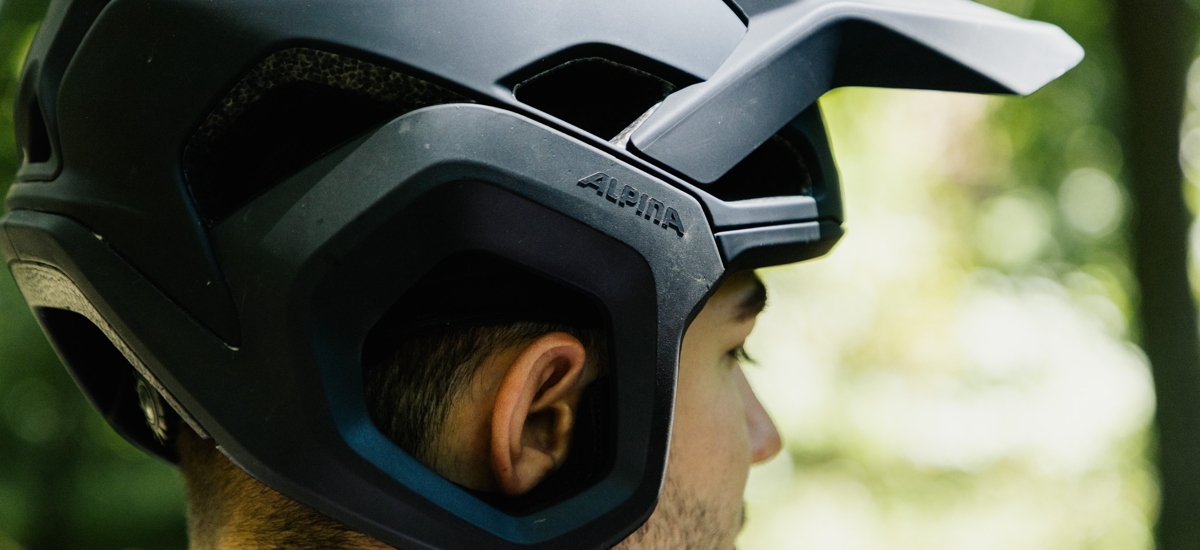
Helmets save lives! But how do you actually choose a helmet, what types of MTB helmets are there, and what should your main focus be?
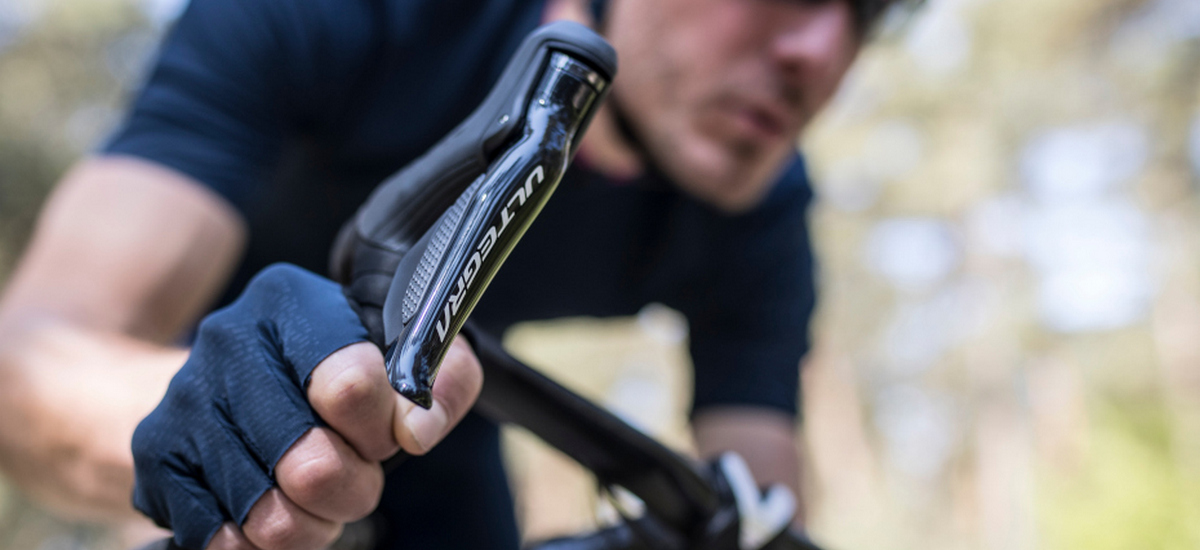
Everyone knows Tiagra, Ultegra, and Dura-Ace. But where do the names Shimano gives to its road groupsets come from?
Shopping for a bike? We'll help you decide whether buying new or used offers better value.
Product selection

Clearance -15% Superior XP 9.2 29 bike, matte carbon/red carbon
1,749 €
-15%
RRP 2,049 €

 arrow_outward
