















































Shimano road groupset names - where do they come from?
Everyone knows Tiagra, Ultegra, and Dura-Ace. But where do the names Shimano gives to its road groupsets come from?
Since its founding in 1921, Shimano has grown into one of the largest giants in the bicycle component industry. Recently, however, I found myself wondering how on earth they came up with such unusual names for their groupsets and what historical context lies behind each one.As is often the case with me, I started Googling.
Shimano Tourney A070 (2x7)
This groupset is currently the most basic option for equipping a road bike (assuming you want dual-control levers). For example, I once considered installing it on my Favorit, but then I decided it probably wasn't the best idea. 🙂 When it was introduced in 1971, its name was derived from the word “tournament”.Starting with aluminium instead of steel components, continuing with the legendary Shimano SIS—Shimano Index System (which, by the way, I still consider one of the best shifting systems I've ever used 🙂)—and culminating in dual-control levers, this groupset has been serving beginner road cyclists for decades.
Interestingly, I believe it is currently the only Shimano road groupset where downshifting is performed with the thumb on the inside of the lever rather than by moving the entire brake lever.
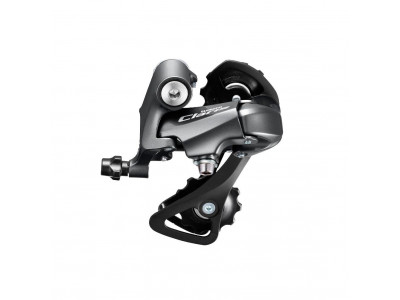
savings Shimano Claris RD-R2000 rear derailleur, 8-speed, long cage GS
23.99 €
savings
RRP 35.99 €
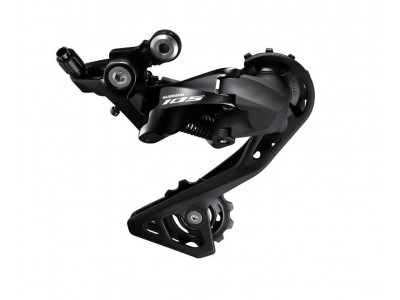
savings Shimano 105 RD-R7000-GS rear derailleur, 11-speed, long cage
47.99 €
savings
RRP 75.99 €
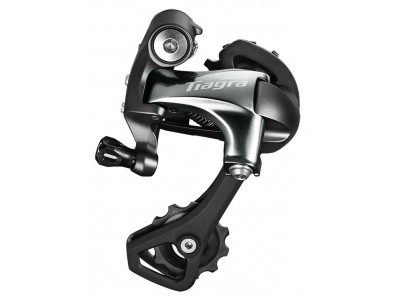
savings Shimano Tiagra RD-4700 rear derailleur, 10-speed, long cage (GS)
31.99 €
savings
RRP 53.99 €
Shimano Claris (2x8)
In contrast, Shimano Claris is much younger and is probably the newest of all Shimano road groupsets. It first appeared in 2003 under the name 2200, and the name Claris was only assigned to it in 2013. The name comes from the word “clarity,” intended to evoke the clear and beautiful landscapes we cycle through.Its main advantages are its versatility and affordability. Despite its entry-level positioning, its design does not lag behind its more expensive siblings, and it is fitted to many budget-friendly road bikes.
Shimano Sora (2x9)
“Sora” means “sky” in Japanese. With this name, Shimano wanted to convey the joy of cycling beneath an azure sky. This idea was particularly evident in the first generation of the groupset, introduced in 2000, where the logo featured a blue background as a subtle reference to the concept.The aim was likely to appeal to a broad audience, which is further reflected in the 2021 update that also introduced traditional shift levers for flat handlebars.
Shimano Tiagra (2x10)
Slowly but surely, we're moving into the mid-range segment of road groupsets. No matter how hard I searched, I couldn't find the origin of the name “Tiagra,” but I'm sure someone out there knows more than Google. 🙂Nevertheless, it's a groupset that can easily satisfy moderately advanced riders. After all, that one missing cog is far less noticeable than on entry-level groupsets, and the gearing range is already quite respectable.
Shimano 105 (2x11)
I think this is the first truly “serious” groupset for many cyclists, as its gearing brought us to what was, until recently, the maximum cassette range of eleven cogs. I have it on my current road bike, and if weight isn't your primary concern, it's probably the best overall choice.It is currently the only Shimano road groupset with a numerical designation.
There are several theories about the origin of its name, but I was particularly intrigued by one linked to the 1980s. At the time, Levi's 501 jeans were highly popular in Japan and symbolized durability and performance. Shimano reportedly wanted to transfer those qualities to its groupset, and by simply reversing the numbers, the 105 was born.
However, since numerical designations were commonly used for groupsets when it was introduced, many believe that the name simply originated from the SL-A 105 shift lever.
Whatever the true story may be, it remains one of the most popular groupsets among enthusiast cyclists today—and it is now also available in an electronic 12-speed version.
Shimano Ultegra (2x12)
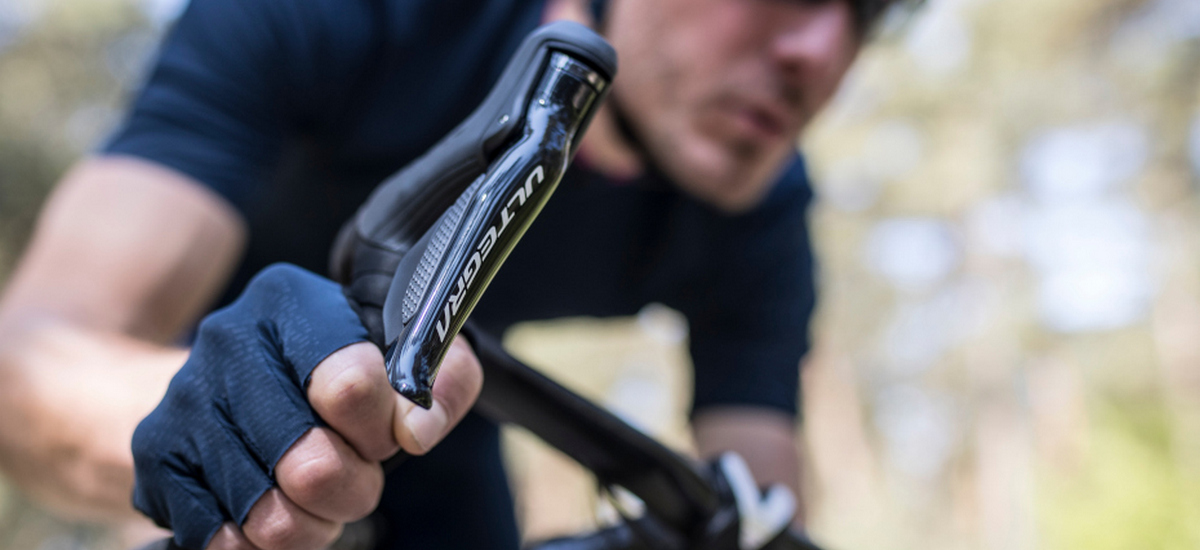
We now arrive at two groupsets whose names were perhaps the easiest to trace, as both are simple combinations of English words.Shimano Ultegra was introduced in 1976, and its name combines ULTimate and IntEGRAte, which can be interpreted as complete or ultimate integration.
When we talk about Ultegra, we're talking about a groupset that remains financially attainable for most enthusiasts. Honestly, I probably wouldn't want Dura-Ace on my bike—I would constantly worry about where I could safely lean it. 🙂 Ultegra has inherited many technologies from its bigger sibling, most notably the recent 12-speed platform.
Shimano Dura-Ace (2x12)
The flagship of Shimano's road groupset lineup and something most of us can only admire during TV broadcasts. 🙂The name reflects its intended purpose: “Dura” is derived either from “duralumin” (an aluminum alloy) or from “durable,” while “Ace” clearly suggests top-level performance and excellence.
When it appeared on the bikes of the Belgian Flandria team in 1973 as the only real alternative to Campagnolo, it undoubtedly caused many cycling purists to raise an eyebrow. Over the years, however, it became the most widely used road groupset among WorldTour teams.
That said, it should be noted that some components, such as chains, sacrifice a degree of durability in pursuit of lower weight.
We could continue with other names, such as Di2 (Digital Integrated Intelligence), or Shimano's various urban groupsets, but there's no need to reveal everything at once.
Interpretations of these names often vary. For example, I've heard people joke that Ultegra means “nice shifting” and Dura-Ace means “very nice shifting.” 🙂
Regardless of which explanation you prefer, I'm fascinated by the many different sources of inspiration that can lead to names like these.


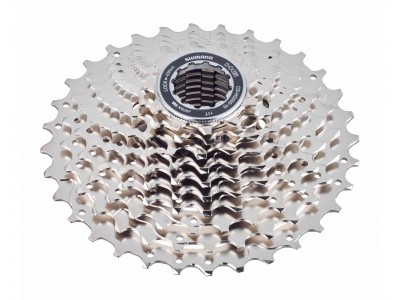
savings Shimano Tiagra CS-HG500 cassette, 10-speed
from 22.99 €
savings
RRP 37.99 €

 arrow_outward
