

Does an endurance road bike still have a place in the market?
Is an endurance road bike just what the average 'hobbyist' needs?
Let me start with an unpopular opinion. The vast majority of people who crave an aero road frame and 60 mm rims don't actually need an aero road frame and 60 mm rims. As a happy owner of an endurance 'razor' for several years now, I'll try to lay out a few reasons why this should be the bike of choice for the average hobby cyclist.Endurance covers a wide range of rides
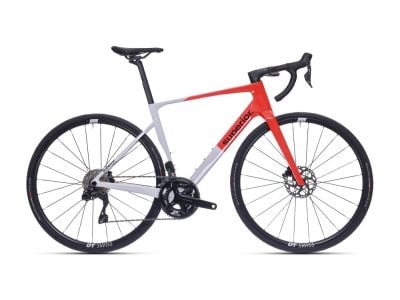
For several years, I've been riding an endurance Superior X-ROAD Team Issue in a slightly 'tuned-up' version. At time of purchase, I hadn't even heard a whisper about the differences between road bike frames. I simply liked the design, colour, and sleek 'fairing'. 🙂 But as the kilometres piled up, I became more and more convinced that it certainly wasn't a wrong move.
This time, however, I won't be dissecting the bike in terms of its equipment or components – after all, I exhausted that topic in my 'review'. But lately, I feel that endurance road bikes are somehow losing momentum among the cycling public. And unfairly so.
We all must admit that social media does a certain disservice to the cycling industry and the sale of endurance road bikes, as almost everyone boasts about massive frame tubes and deep-section rims.
But when was the last time you saw a nice endurance bike on Instagram?
First and foremost, I should define myself as a rider, because what suits me might not suit someone else. In principle: the longer the route, the better for me. It's just that high average speed still eludes me. 🙂
I'm actually quite successfully refuting the claim that a road cyclist should always be 'hammering' at least 300 watts, with their tongue tangled in the chainring, and an average speed starting with at least a 3 on every ride.


And why am I writing all this? Because I believe that the vast majority of us (especially those who are just planning to buy a road bike) are the same. So how do you resist the temptation to throw money at a highly efficient aero bike when the endurance category can do the same, just a little slower?

-10% BMC Teammachine SLR 01 Custom bike, all red/black
9,899 €
-10%
RRP 10,990 €
Comfort, comfort, and more comfort
The greatest asset of endurance bikes is the comfort they offer. This is achieved in several ways.Let's start with the bike frame itself. Let's assume that anyone serious about cycling, and not a fan of garage builds or legends like CAAD aluminium, will head towards carbon. Again, I'll refer to the differences in frame materials – because not all carbon is created equal.

But in short, the method and direction of laying carbon fibres, or their thickness, allow us to achieve certain frame properties. Either the frame will be efficient in power transfer but more of a 'jackhammer' (frames made of high-modulus fibres), or we sacrifice stiffness, meaning the frame will 'flex' more but gain damping properties (frames made of mid-modulus fibres).
Again, the question arises – if I'm not racing, do I absolutely need a stiff frame? Is it more valuable for me to be a few seconds faster somewhere than to have comfort on every ride?

The second way the frame contributes to comfort is its geometry. Endurance bikes offer a more upright riding position. A longer wheelbase, higher stack, longer head tube, and a slacker head angle – all of this means you won't be sitting 'aggressively' on the bike, and if you're not used to it, your back won't give up after a few tens of kilometres.
Instead, the bike will be calmer and offer more material that can absorb shocks. And again, we're back to the previous point.


The third way to achieve greater comfort on an endurance bike is through wheels and tires.
If I stick with the frame for a moment, endurance frames are generally more generous in terms of tire clearance. Although I have an older Superior frame, on paper I should be able to fit up to 40 mm tires.
However, it's common for manufacturers to design endurance frames to accommodate 32C and wider tires. While the trend for wider tires is constantly growing in the world of professional cycling, here the aerodynamic efficiency of the overall system still plays a role.

Higher frame clearance allows for another clever trick. Since bikes typically come with aluminium wheels, there's always the option to buy a carbon setup and mount narrow tires for good surfaces. And then put wider tires – 'as wide as the frame allows' – on the original wheels.
This way, you get a true all-round machine that can handle occasional shortcuts with less-than-ideal asphalt quality.

What about gravel?
The obvious question that must crossed your mind now is: "Okay, but wouldn't it be better to buy a racing gravel bike then?" And believe me, I have contemplated this question many times. But there are still several factors to be considered.The first, of course, is why I should buy a gravel bike when I primarily want to ride on the road. 🙂 Wider tires are undoubtedly great, but in road cycling, the proverbial gravel shortcuts still represent only a tiny percentage of all the kilometres I cover. And if I do take several of them during one ride, it can be nicely managed by the aforementioned wheel swapping.


The second thing is gearing. Single chainrings are becoming increasingly prominent. I would recommend them if you ride on flat terrain.
However, as soon as one starts riding more in the hills, a single chainring becomes a compromise – either uphill or downhill. And yes, a double chainring could partially solve this (with adaptation to different gearing).
But we come to the third and most important variable…
…and that is price. No matter which perspective I looked at it from, a gravel bike in a similar weight category always costs more. A BMC Kaius is definitely a rocket, and a Pinarello Dogma GR is the same – after all, even the new Superior I tested out in Belgium literally blew me away. However, once you get to the price tag, you somehow lose your enthusiasm. 🙂
The point is that while you won't be riding through fields with an endurance bike (unless you're a masochist by profession), it can offer many advantages that racing gravel bikes bring. And at a fraction of the price.

I don't want to come across as a hater of aero bikes or climbing specialists in the end – they certainly have their place among cyclists. Especially when we're talking about racing cycling (whether pro or amateur), average speeds well over 30 km/h, or riding in the wind.
But in the end, we always come back to that uncomfortable question – should I buy something that looks nice but is personally unnecessary for me, ride the wave of social media, the World Tour peloton, and the rule of a slammed stem? Or should I opt for a 'plainer' but far more functional alternative? The decision is up to each of us.
Photo source: editorial archive
Similar articles
While it might not be immediately obvious, road bikes come in various subcategories. How to pick the perfect one?
Does carbon offer unrivalled properties? Is aluminium merely a "low-cost" option? In this article, we will examine the frame materials of both road and mountain bikes.
Why are crank lengths shortening across the pro peloton, and can everyday riders benefit?
Product selection


Clearance New model -8% Orbea Terra H40 28 bike, infinity green/ivory white
1,849 €
-8%
RRP 1,999 €

 arrow_outward
