
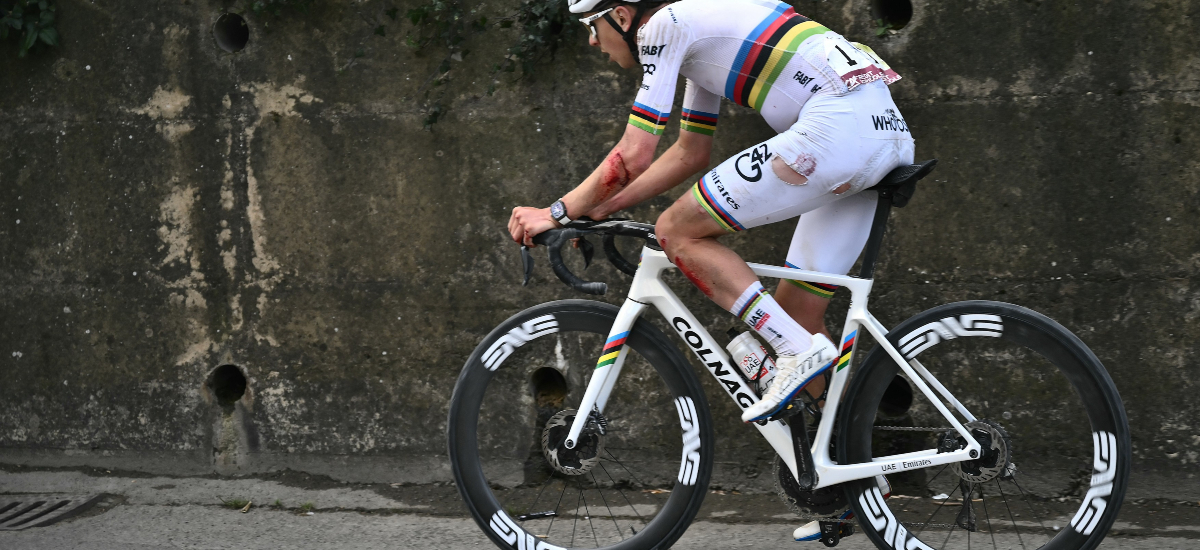
Will short cranks make you into Pogačar?
Why are crank lengths shortening across the pro peloton, and can everyday riders benefit?
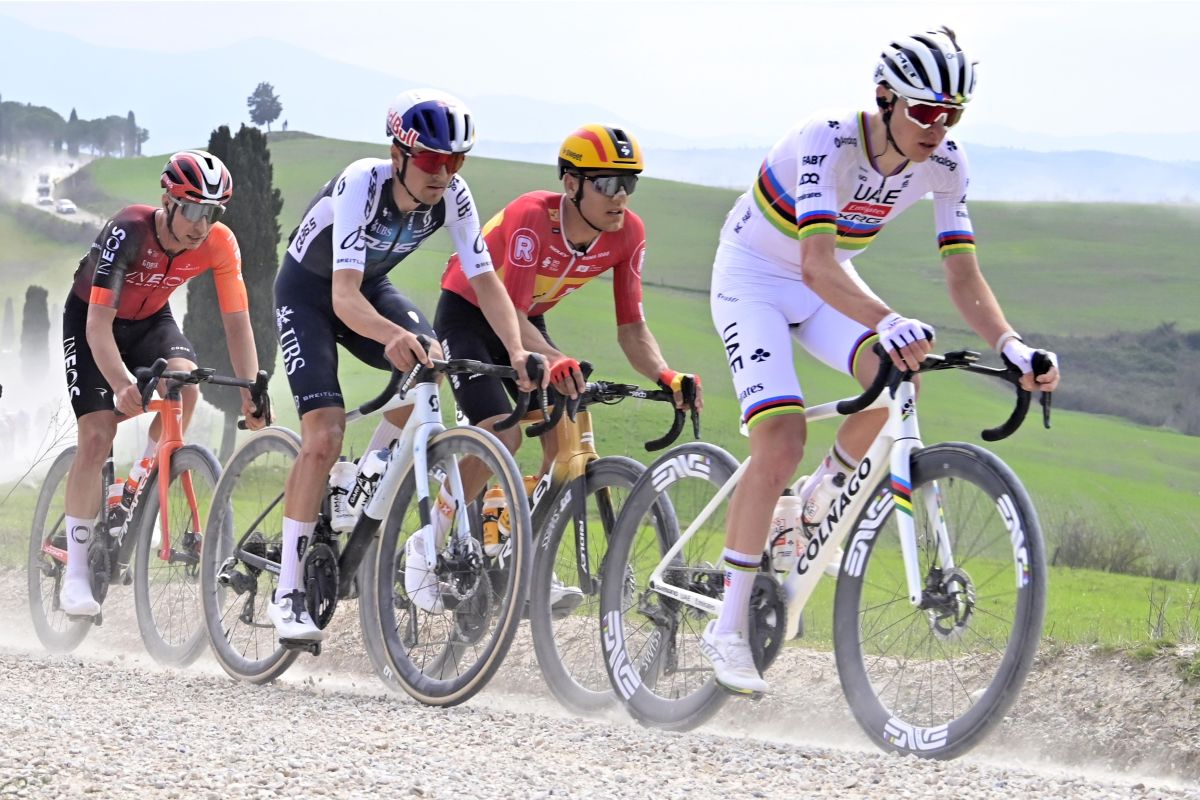
If I were to summarize the current trends in the World Tour peloton (and those we know about), there would probably be three. The first is the use of time trial helmets outside of time trials, meaning in classic races. Then we have the use of the 13-speed SRAM XPLR gravel groupset with "massive" single chainrings, and thirdly, a significant shortening of crank length. And that's what we'll talk a bit more about today.When I say significant shortening, I'm not exaggerating. Jonas Vingegaard was even seen testing 150 mm cranks in recent races. But the biggest "popularizer" is none other than Tadej Pogačar, and let's recall his progression.
In 2022, he used 172.5 mm cranks, in mid-2023 he switched to 170 mm cranks, and in 2024 he started using even shorter, 165 mm cranks. Naturally, this trend hasn't escaped the attention of competitors, nor enthusiastic hobby riders.
So, can short cranks be responsible for Pogačar's otherworldly performances? And why might they be an advantage over the long-established 175 mm standard?
Back when times were different
Before we look at the reasons for the shortening, let's go back in time – and to the opposite approach. Long-time fans might remember the 2-meter tall Czech rider Ondřej Sosenka. He became famous primarily for his hour record, which he set in 2005 at 49.7 km.Power isn't just about applying force to the pedal. Power is work done over a certain period.
The fact that the record stood until 2014 testifies to his exceptional performance. And do you know how long the cranks he used were? They were exactly 218 mm. And he also pushed really heavy gears; for the record, he used a 54x13 combination. Of course, it was linked to the idea that a larger lever allows for heavier gears, resulting in faster speeds... Quite logical, right? Tall riders, especially, were supposed to benefit from their advantages.
I was no exception; I still have 180 mm Shimano XT cranks at home. I rode them for quite a long time, but later I found that 175 mm didn't slow me down at all, and I also hit rocks less often with my pedals. 🙂
Is it about power – or not?
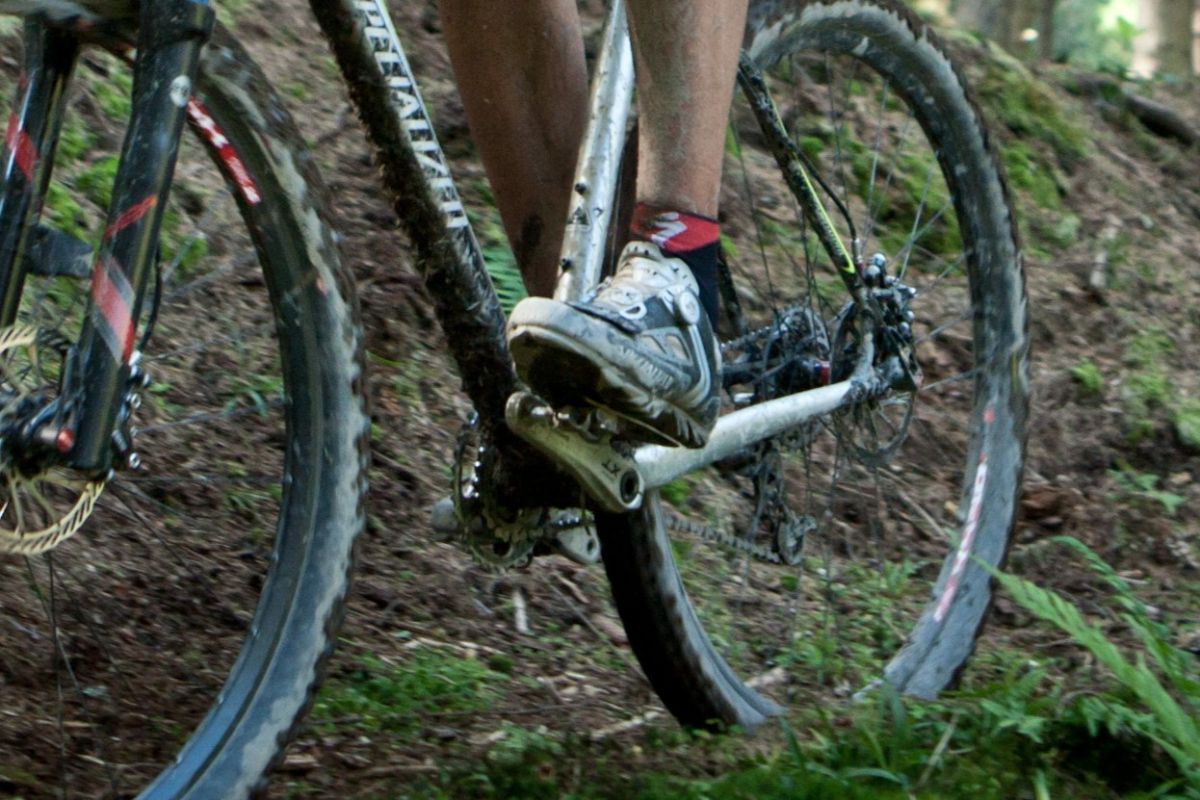
The idea that longer cranks allow for greater leverage, and thus you can pull heavier gears, is appealing and true. But power isn't just about applying force to the pedal. Power is work done over a certain period. I can increase it by applying more force, but I can also increase it by pedalling faster. 🙂Returning to cranks – longer cranks draw a longer path, which increases the time mentioned, or, in other words, reduces cadence. So, the outcome is not at all straightforward, and many factors come into play.
Regarding research, riders were able to develop greater power in sprints with slightly shorter cranks than with longer ones during testing. That's why sprinters have generally used shorter cranks for a long time, but they certainly didn't go to extremes like today.
What's the catch?
So, if it's not about increasing power, where is the advantage of short cranks? Well, it's important to realise that short cranks don't directly affect power, but they do influence bike position.Yes, we're heading towards aerodynamics, which is becoming increasingly important in today's cycling due to constantly rising speeds. We hear almost every year how the peloton's average speed increases and one record after another is broken...
A perfect example is Strade Bianche, which was again the fastest in history, despite being 20 km longer and with more elevation gain. 🙂
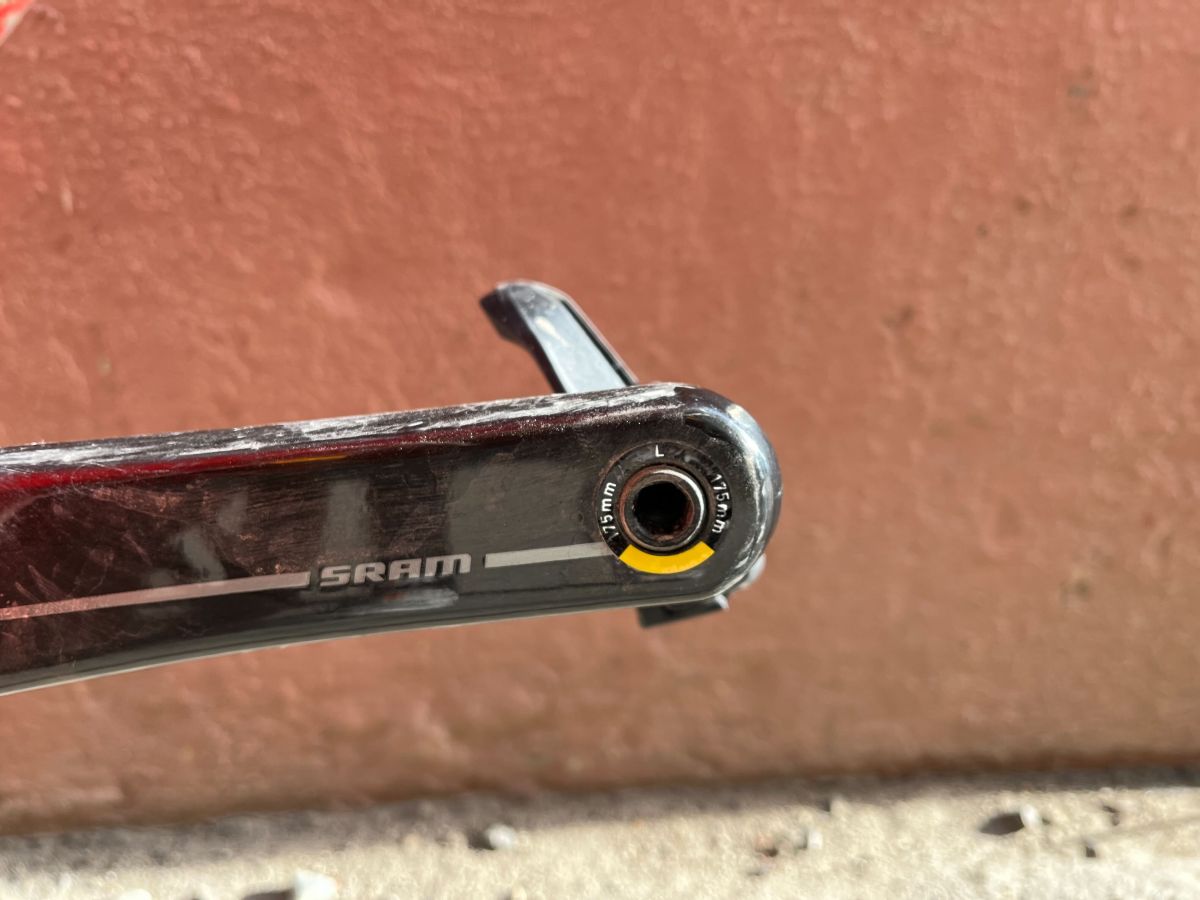
Looking at elite cycling, "classic" races are not far from time trials.Imagine, or even try for yourself, to tuck in as much as possible and get low on the handlebars. Now start pushing hard on the pedals. It's not comfortable, but where will you feel the biggest problem when applying pressure to the pedal? I assume it's at the top dead center, where your knee forms the sharpest angle with your body's axis. In the photo below, you'll see exactly what I mean.
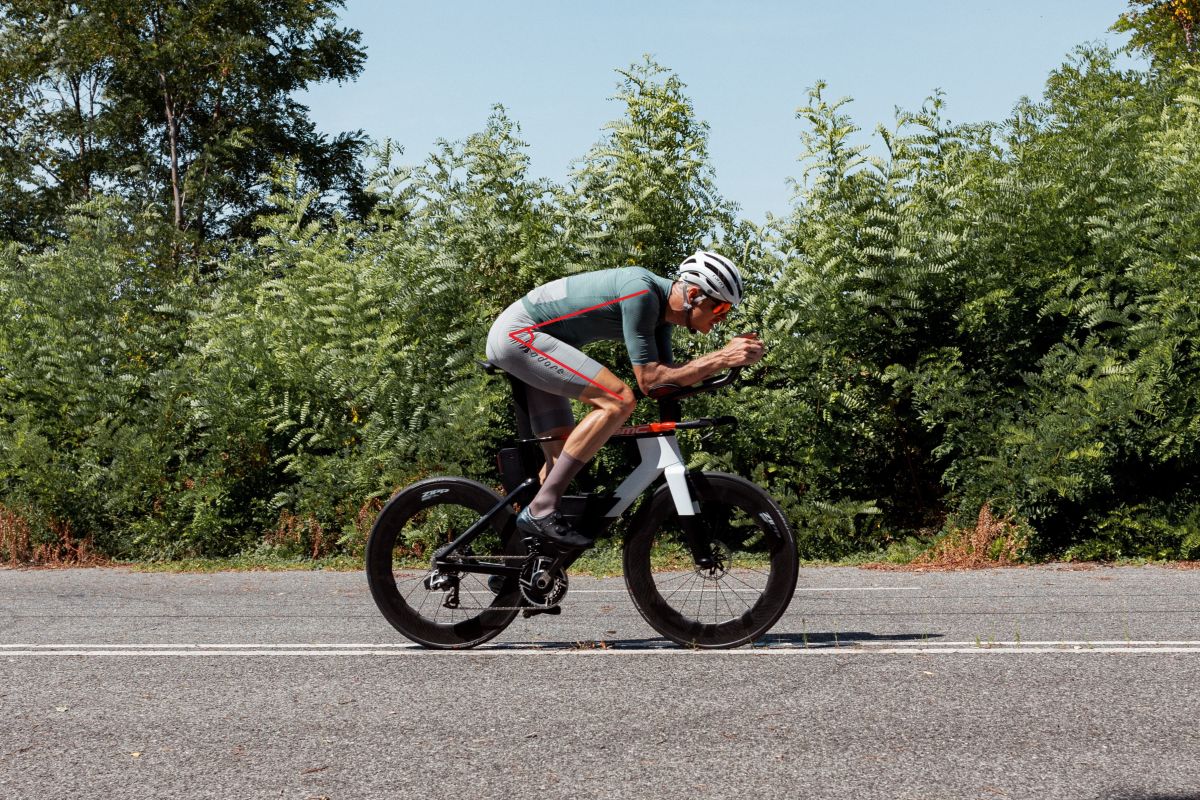
If you shorten the cranks, you can maintain an aerodynamic position while the angle will be more open. The rider can stay better tucked in, experiences less discomfort, and as a result, goes faster.
This shortening trend came from time trials, where, paradoxically, tall riders with a large drop (the difference between saddle height and handlebar height) could position themselves well on the time trial "bar." We don't even have to look abroad for an example; my colleague Cepo also switched from 180 mm to 172.5 mm on his machine for the exact same reason.
When you look at the concept of today's elite cycling, even "classic" races are not far from time trials. Average speeds in classics hover around 45 km/h, and in stage races around 43 km/h. Riders break away solo almost 80 km before the finish – see Tadej Pogačar at the last World Championships.
Being able to tuck in well and maintain that position for an extended period is a huge plus, or rather a necessity, in today's cycling. After all, the body itself creates the most resistance, far beyond the bike and other "aero" gadgets. 🙂
But shorter cranks have another benefit that hobby riders can probably gain the most from – and let's ignore pedal strike for a moment. A more open angle at top dead center also means less strain on the knees.
In fact, it's not a negligible advantage even for professionals, considering the mileage they have to cover in preparation, not to mention three-week Grand Tours. The ability to fine-tune the riding position and simultaneously relieve the knees a bit is the main reason why you currently see the peloton "migrating" to shorter cranks.
Do I need short cranks?
Replacing cranks is certainly not a cheap affair, not to mention if you have a power meter on them, or even if you have multiple bikes.Of course, it's not necessary either, because as always, not everything professional riders use is automatically equally good for hobby riders. And most importantly – ultimately, each of us is different. But the 175 mm standard, established over years, will probably slowly begin to shake at its foundations.
The latest research shows that the optimal crank length for a given rider is now stated as 20 % of their leg length, or from a value known as inseam. Let's take men, where the average height in Europe is 175 – 181 cm, which corresponds to an average inseam of approximately 82 cm. After calculation, we arrive at a value of 164 mm. Of course, these are "rough" numbers, but you'll see where I'm going with this.
When you look at the charts, you usually won't find similar values even for the smallest sizes.
We can also apply these findings to MTB, where, among other things, we gain the mentioned benefit of less ground contact. And not only there... Shortening them allows for a lower center of gravity, for example. After all, downhill and enduro riders have been using short 160 mm cranks for a long time.
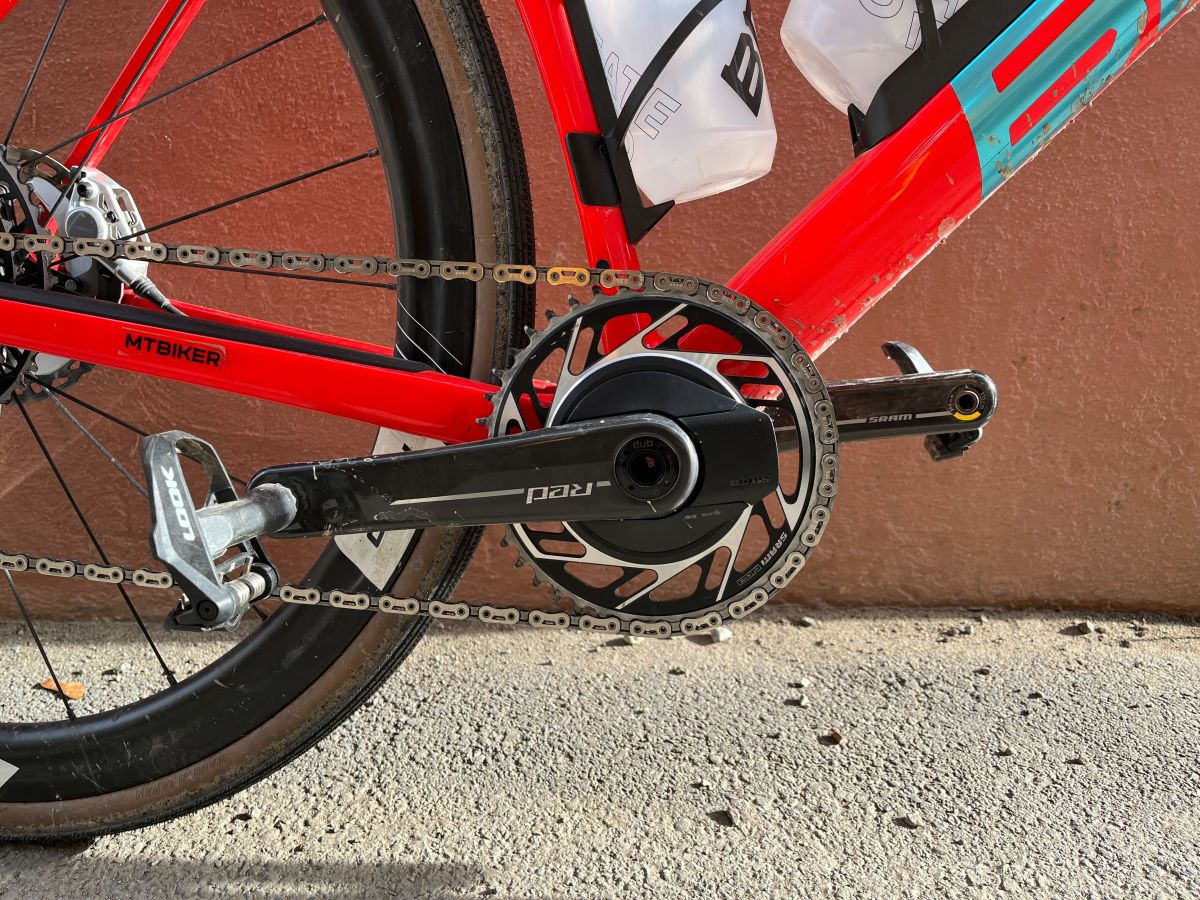
It was interesting when I did the calculation for myself. I have extremely long legs and an inseam of 99 cm. After recalculation, I arrive at a value – a moment of suspense – 198 mm. Cepo and I agreed that tall riders like us have been cool for a long time because we ride significantly shorter cranks than we should. And perhaps that's why our knees don't hurt even after so many years. 🙂
What's the takeaway?
I hope I've given you some insight into what's behind the current trend of shortening cranks. It will be interesting to see how manufacturers deal with this situation and whether the geometries of offered bikes will gradually be "overhauled." Not to mention availability from component manufacturers.It's possible that the established 175 mm standard will gradually be replaced by a completely different value. And until then?
There's certainly no need to fear shorter cranks, and if you suffer from knee pain and nothing else helps, they might ultimately be the right solution and the key to an ideal riding position. If you don't feel any pain, aerodynamics don't bother you, and you're not constantly hitting the ground with your pedals, feel free to keep riding. Shorter cranks certainly won't turn you into Pogačar. 🙂
Photo source: editorial archive
[Cover photo: profimedia.sk]
report_problem Did you find a mistake in the text?Similar articles

Is an endurance road bike just what the average 'hobbyist' needs?
Riding by heart rate zones is the first small step into the world of cycling training. But what do the individual zones mean?
While it might not be immediately obvious, road bikes come in various subcategories. How to pick the perfect one?

 arrow_outward
