
































































Road vs. Mountain Bike: Which Is Better for Climbs?
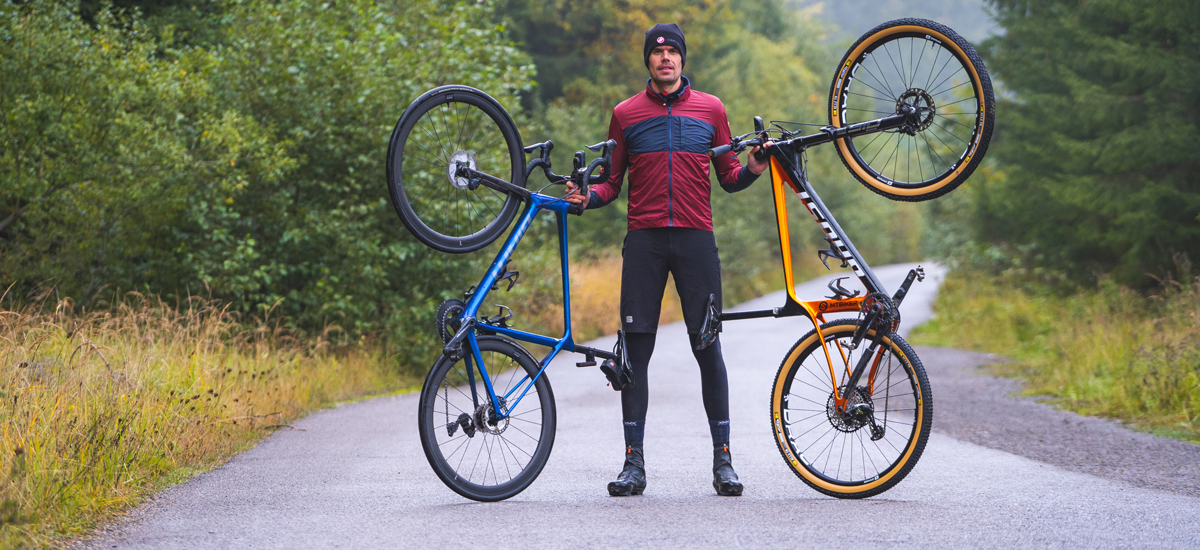
Ever wondered how much slower a mountain bike is on an asphalt climb compared to a road bike? We put both to the test and compared not only the numbers, but also how they feel to ride.
Let's have a little fun and compare something that might seem a bit strange at first glance. You might even ask, "Who actually benefits from this?" 🙂To be honest, I've wondered about this for a long time. Not because I absolutely needed an answer, but because the question often crossed my mind whenever I was climbing a hill. And over the past few days, several things prompted me to finally find out.
The biggest trigger was a recent hill-climb time trial where, apart from age categories, there were no separate classes for road and MTB bikes. As a result, there was quite a diverse mix of equipment on the start line. Although the course was entirely on asphalt, it was far from smooth. The opening section, in particular, featured heavily damaged pavement full of gravel and potholes. In the end, I chose the road bike. 🙂
Many riders only own a mountain bike and wonder how much faster they would be on a road bike on a particular climb.
Another factor was a recent trip to Slovenia, where I brought both a road bike and an MTB. It made me wonder which one I would choose if I could only have one bike. The descent from the legendary Vršič Pass was a perfect example. Almost every hairpin is paved with cobblestones, forcing me to brake constantly on a road bike. On a mountain bike, I could fly over the cobbles and carry much more speed through the corners. It also opens up many more route options.


Going uphill, you can often manage surprisingly rough terrain on a road bike. Descending is a different story—it is usually slower, less enjoyable, and sometimes feels more like controlled suffering than fun.
As a result, you might actually complete the entire route faster on a mountain bike if you include the descent. That's especially valuable in colder conditions. It's not just about time; safety also plays a major role, particularly during winter.
Then there are many riders who own only a mountain bike and wonder how much time they could gain on their favourite climb if they switched to a road bike. This is especially true if you're competitive and enjoy comparing your efforts on Strava segments.
So there were several reasons for this experiment, and in reality, there's nothing simpler than testing it yourself. If nothing else, it's a good workout. 🙂


A Million Possible Outcomes
Before getting into the numbers, I want to stress one very important point: please don't treat this as scientific research.Every difference in components and setup—tires, tire pressure, bike weight, and countless other factors—will influence the result, and everyone who repeats this experiment will get slightly different numbers. Different climbs will also produce different outcomes.
That said, I think it's still possible to arrive at a rough estimate and create at least a general picture. 🙂
Our Test Track
We had several options nearby. The climb starts gradually and covers 9.8 km with 445 meters of elevation gain, averaging around 4.5%.The real challenge begins after the official end of the village. That's where we conducted the comparison: a 4.4 km section with 342 meters of elevation gain and an average gradient of approximately 7.6%. The climb reaches an altitude of roughly 1,000 meters above sea level.
So, What Did We Find Out?
Let's move on to the results. One thing that pleased me was that I once again managed to match my power output very closely on both attempts. Of course, keep in mind that even power meters have some degree of measurement variance.I first rode the Ghost mountain bike (10.95 kg). The climb took me 21 minutes and 9 seconds at an average power output of 303 watts and an average heart rate of 165 bpm.
Then it was the road bike's turn—a Giant weighing 8.4 kg, including a saddle bag, CO₂ cartridges, spare tube, and other essentials. At the same average power output, I completed the climb in 18 minutes and 44 seconds, with an average heart rate of 168 bpm.
The final difference was 2 minutes and 25 seconds in favour of the road bike under these conditions.
The numbers are one thing. The sensations are another.


I've never directly switched from one bike to another and ridden the same climb at the same power output before.
While the MTB was slower, what surprised me most was how much more comfortable it felt on the steeper sections.
The riding position plays a major role. Modern mountain bikes, following current geometry trends, are designed to excel on steep climbs. The long frame and short stem on the Ghost make it feel incredibly stable. I simply sit down and pedal. There's no need to shift around on the saddle, and the 760 mm handlebars provide excellent control and comfort.
A lot of this comes down to personal preference, especially since I spend most of my riding time on mountain bikes. But there's one factor that cannot be ignored: gearing.
With a 34-tooth chainring and a 10–50T cassette, the MTB offers enough range for virtually any paved climb in my area.
Cycling isn't just about practicality. It's about passion—for the sport, the culture, and everything that comes with it.
Thanks to this setup, I can maintain a comfortable cadence even on steep gradients, which helps reduce muscular fatigue. The Giant isn't poorly geared either. It uses a compact 50/34 crankset paired with an 11–30T cassette, and I'd say I'm reasonably fit. 🙂 Even so, on gradients of 12% and above, I often find myself grinding harder gears and spending more time out of the saddle, which contributes to greater fatigue later in the climb.


So, if you're considering tackling more climbs on a road bike, pay close attention to your gearing. Modern drivetrains can comfortably accommodate 11–32T or even 11–34T cassettes. Don't worry—you'll still have more than enough range for flat roads.
In situations like these, I also appreciate the characteristics of oval chainrings. I use Absolute Black ovals on all of my bikes.
The rougher the surface, the smaller the performance gap becomes.
In this test, we rode almost entirely on smooth asphalt. Add a few proper gravel sections or loose stones, and the equation changes significantly. The descent is a separate discussion altogether. In that area, stability and safety clearly favour the mountain bike. For beginner riders especially, that's an important consideration—and one reason why a mountain bike remains the best choice for my wife, even though much of her riding is on asphalt.
In fact, I still believe that nothing beats a lightweight hardtail if you want a single bike that can do almost everything.
And if you're thinking about a gravel bike, remember that many of the forest roads and mountain-hut climbs around here are a long way from the smooth gravel roads featured in advertisements. 🙂
Why Choose a Road Bike?
Up to this point, it may seem as though the road bike is losing the emotional battle, even though it won the test by a significant margin.From a purely practical perspective, an average cyclist might conclude that the difference isn't all that important—especially when mixed-surface riding is involved.
But cycling isn't just about practicality. A huge part of it is passion—the love of the sport, its traditions, and everything that surrounds it.
Climbing on a road bike has a unique charm rooted in cycling's rich history. The bike flows effortlessly, hills become challenges to conquer, and it flies across flat roads. Facing a headwind? Lower your body, grab the drops, and keep pushing.
And if you've ever become obsessed with watching the Tour de France or the spring classics, that feeling only grows stronger. I think many of you know exactly what I mean. 🙂

As I've recommended many times before, don't be afraid to use slightly wider road tires, such as 28 mm models, paired with sensible tire pressures.
For example, I run approximately 4.5 bar in 30 mm Continental GP 5000 tires. The result is noticeably greater comfort, especially on rough roads, gravel-covered sections, or loose chippings. Grip and safety improve significantly, while speed remains virtually unchanged. Perhaps that's something worth testing in the future as well.
And one final thought: if you didn't find this comparison particularly interesting, give it a try yourself sometime. 🙂
Photo source: editorial archive
Similar articles
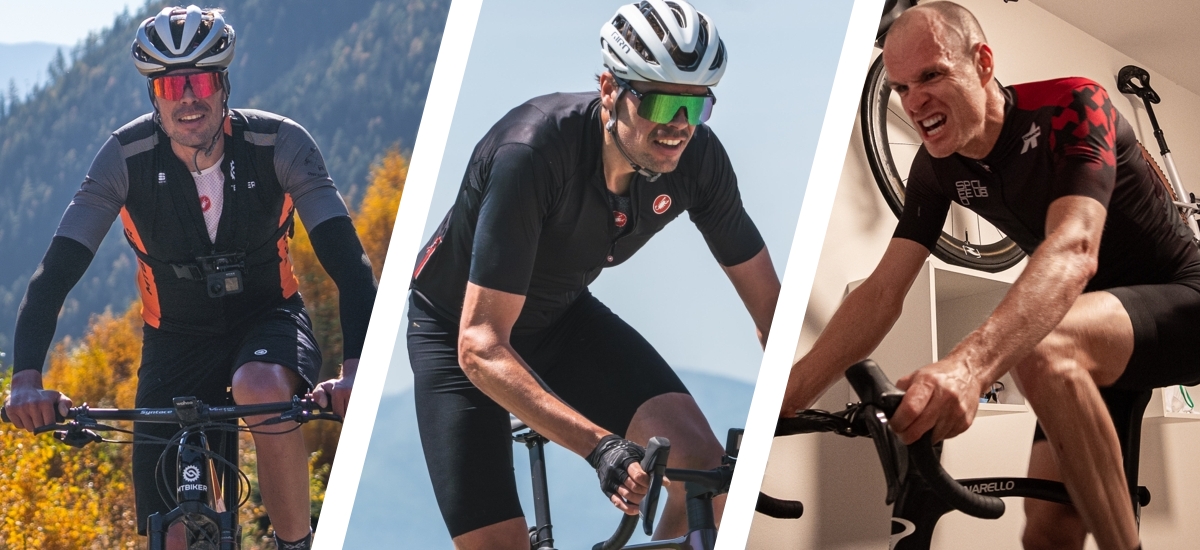
Riding according to heart rate zones is the first small step into the world of cycling training. But what do the individual zones actually mean?

Exercise can improve your strength, increase riding comfort, and help prevent injuries.

Downhills, speed, kilometres. Even too much of a good thing can become a problem. So how do you avoid burnout?


 arrow_outward
