

































































Bike Trainer Guide: Beginners to Pros
Fall is here, winter is approaching, and indoor cycling will soon replace outdoor training. Learn how to choose the right trainer for your goals and budget.
As the weather turns colder, thousands of cyclists move from the open road to the comfort of their homes. Modern technology has transformed indoor training into a distinct sporting phenomenon. But how do you navigate the wide range of options and choose the solution that best fits your needs, available space, and budget?The cheapest trainer? Classic Wheel-On Trainers
The entry-level category consists of so-called Wheel-On models, with prices starting at around €200. The entire bicycle is mounted onto the trainer, and resistance is generated by a roller pressing against the rear tire. Resistance is adjusted manually using a lever mounted on the handlebars, and the device typically does not require an external power supply.You can mount your bike on these without removing the wheel, which is ideal for older road bikes with quick-release skewers.
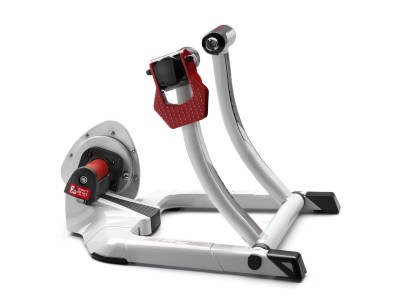
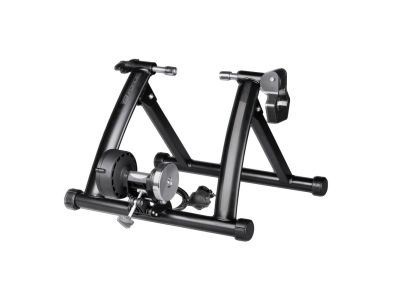
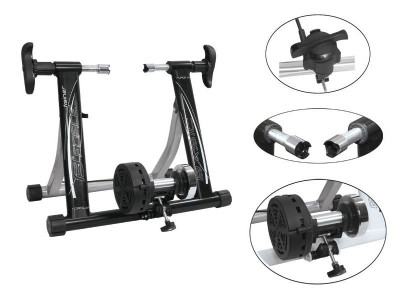
- ➕ Affordable price: The most budget-friendly option on the market.
➕ Easy setup: The bike can be secured without removing the rear wheel.
➕ Portable and self-sufficient: They are lightweight (approximately 8 kg) and do not require a connection to an electrical outlet.
➖ Higher noise levels: Friction between the tire and the roller generates noise and vibrations that can travel throughout the home.
➖ Tire wear: Regular training requires the use of a special hardened trainer tire.
➖ Limited smart features: They do not offer automatic resistance adjustment, reducing the realism of virtual training applications.
The most realistic solution for riding technique? Cycling Rollers
With cycling rollers (typically priced between €150 and €400), the bike is not attached to the frame at any point. You ride directly on three free-spinning rollers connected by a belt. The rider must maintain balance and keep pedalling continuously; otherwise, they risk riding off the rollers. Resistance is adjusted primarily by shifting into harder gears on the bike or by changing the roller settings.These trainers are extremely popular not only for warming up before races but especially among riders who want to improve their balance and bike-handling skills.
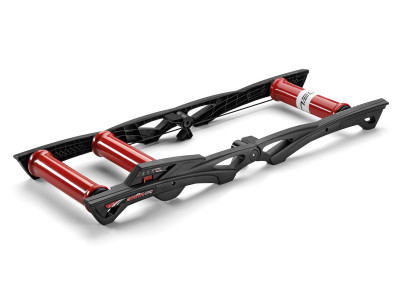
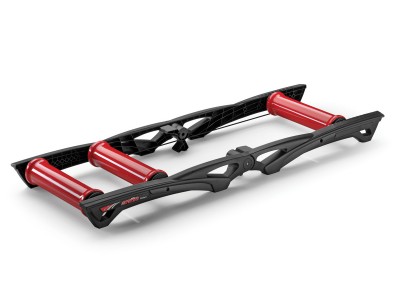
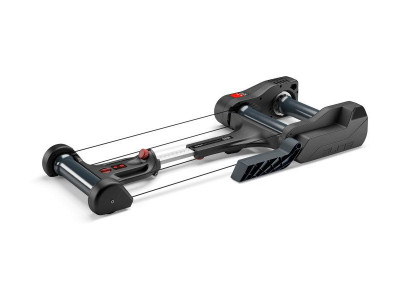
- ➕ Improves technique and balance: Helps develop better weight distribution, smoother pedalling, and overall bike stability.
➕ Lightweight and easy to store: Can be easily tucked away under a bed after training.
➖ Requires practice: For beginners, maintaining balance can be challenging at first, and there is a risk of falling.
➖ Limited maximum resistance: Standard models without a magnetic brake may not provide enough resistance for demanding power intervals.
➖ Noise: Rollers can be quite noisy, which may be an issue for neighbors. 🙂
The quietest and most popular solution? Smart Direct Drive Trainers – Mid-Range
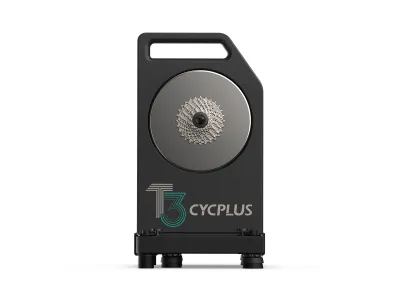
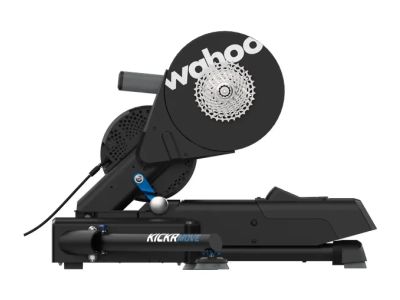
With direct-drive trainers (the golden standard, typically priced around €800), the rear wheel is removed from the bicycle, and the frame is mounted directly onto a cassette installed on the trainer. Resistance is fully controlled electronically, and the trainer communicates continuously via Bluetooth or ANT+ with applications such as Zwift, Rouvy, or TrainerRoad, automatically adjusting resistance to match the gradient of the virtual route.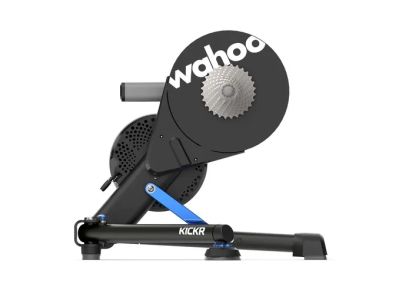
- ➕ Extremely quiet operation: Thanks to direct power transfer, these trainers are ideal for apartments where you want to avoid disturbing your neighbors.
➕ No tire wear: With the rear wheel removed, your tires are spared unnecessary wear and remain ready for outdoor riding.
➕ Interactive and highly engaging: Full compatibility with smart training applications enables instant, automatic resistance adjustments based on the route profile.
➖ Higher purchase price: Compared to wheel-on trainers and rollers, this represents a significantly larger investment.
➖ Wheel removal required: For some riders, regularly removing and reinstalling the rear wheel and handling the chain can be inconvenient.
Uncompromising realism and maximum comfort? High-End Direct Drive
The highest class of smart trainers (typically priced around €2,000) is by no means intended only for performance-focused riders chasing power records. These models are especially valuable for those who demand maximum riding realism and exceptional comfort.They feature advanced motion systems that allow the entire bicycle to move slightly from side to side. This subtle lateral movement significantly reduces static stress on the bike frame, as well as pressure on your joints and gluteal muscles.

- ➕ Maximum realism and comfort: The bike’s side-to-side movement significantly reduces rider fatigue and closely simulates the feel of riding on the road.
➕ Independence from external power: Many premium models (e.g., Tacx Neo) can generate their own power through pedalling and do not require a connection to an electrical outlet.
➕ Exceptional measurement accuracy: They can simulate steep gradients of up to 25 % while delivering highly accurate power measurements, with deviations as low as 1 %.
➖ Very high price: A financial investment comparable to purchasing a quality new bicycle.
➖ Greater weight: Their extremely robust construction can make them difficult to move around the home.
One trainer for all? Smart Stationary Bikes
For households with multiple cyclists of different heights and frame sizes, or for riders who prefer not to mount their outdoor bike on a trainer, standalone smart stationary bikes offer an ideal solution. These are substantial machines featuring fully electronic adjustment of riding position, handlebar setup, and crank length.- ➕ Excellent versatility: The riding position can be quickly adjusted for different household members in just a few seconds using a few simple controls.
➕ Cleaner indoor environment: There is no need to bring a dirty bike or greasy chain indoors.
➕ Maximum stability and premium design: The robust construction can withstand the most demanding sprint efforts, and these bikes often serve as stylish, functional additions to the home.
➖ Large space requirements: The bike becomes a permanent fixture in the room; it cannot be easily stored away, and its weight typically exceeds 40 kg.
➖ Highest price category: This is the most expensive indoor cycling solution on the market, often costing €2,500 or more.

Zwift Cog – for almost any bike
The Zwift Cog is a specialized hardware component designed for smart bike trainers (such as the Zwift Hub or Wahoo KICKR CORE) that replaces the traditional multi-speed cassette. Essentially, it consists of a single cog (single-speed sprocket) with plastic covers that keep the chain securely in place.It works in conjunction with Virtual Shifting technology within the Zwift application.
How does it work?
Instead of the physical derailleur moving the chain up and down the cassette, the chain remains on a single cog (Zwift Cog) throughout the entire ride. Gear shifting takes place electronically.Using a wireless controller mounted on the handlebars, such as the Zwift Click or Zwift Play controllers, you "shift" gears within the application, and the trainer instantly adjusts its magnetic resistance. You then feel a harder or easier gear, even though the chain itself never moves.

Main advantages of Zwift Cog:
- Universal compatibility: This is the biggest advantage. Zwift Cog works with almost any bike equipped with an 8- to 12-speed drivetrain. If you switch bikes on the trainer (for example, you have an 11-speed bike and your partner has a 10-speed bike), you don't have to change the cassette every time.
- Easier setup: There's no need to fine-tune the derailleur after mounting the bike on the trainer to prevent chain rubbing.
- Quieter operation: Because the chain runs in a straight line and does not physically shift between cogs, the ride is significantly quieter.
- No chain drops: With virtual shifting, there's no risk of the chain dropping during a sudden gear change while sprinting or climbing.
- Wide gear range: The Zwift application provides a wide range of virtual gears (24 speeds by default), allowing you to tackle even the steepest virtual climbs regardless of the chainrings installed on your bike.
Final summary for model selection
Choosing a trainer doesn't have to be a nightmare if you honestly answer the questions above from the start.If your main goal is to save money and you're willing to sacrifice some comfort or smart features, opt for a classic wheel-on trainer. If your priority is developing smooth pedaling and balance, indoor rollers are the right choice. If you're looking for quiet, interactive training without an extreme price tag, go for a mid-range direct-drive trainer.
And if you don't want to compromise, demand a truly realistic riding experience rather than just high performance, or plan to share the trainer at home, don't hesitate to invest in a premium direct-drive model or even a smart stationary bike.



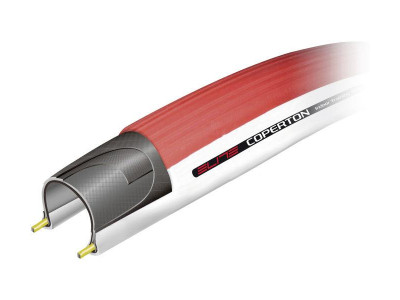
-12% Elite COPERTON INDOOR 700x25C tire for indoor trainer, kevlar
29.99 €
-12%
RRP 36.99 €
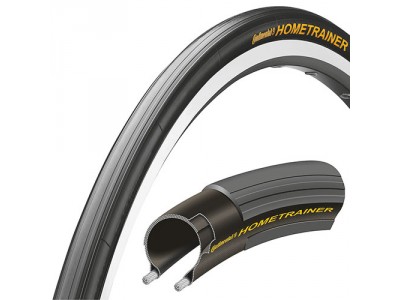
-23% Continental Hometrainer II 700x23C indoor trainer tire, kevlar
19.99 €
-23%
RRP 49.99 €


 arrow_outward
