


































































Kompava ENERGY protein, 2000 g
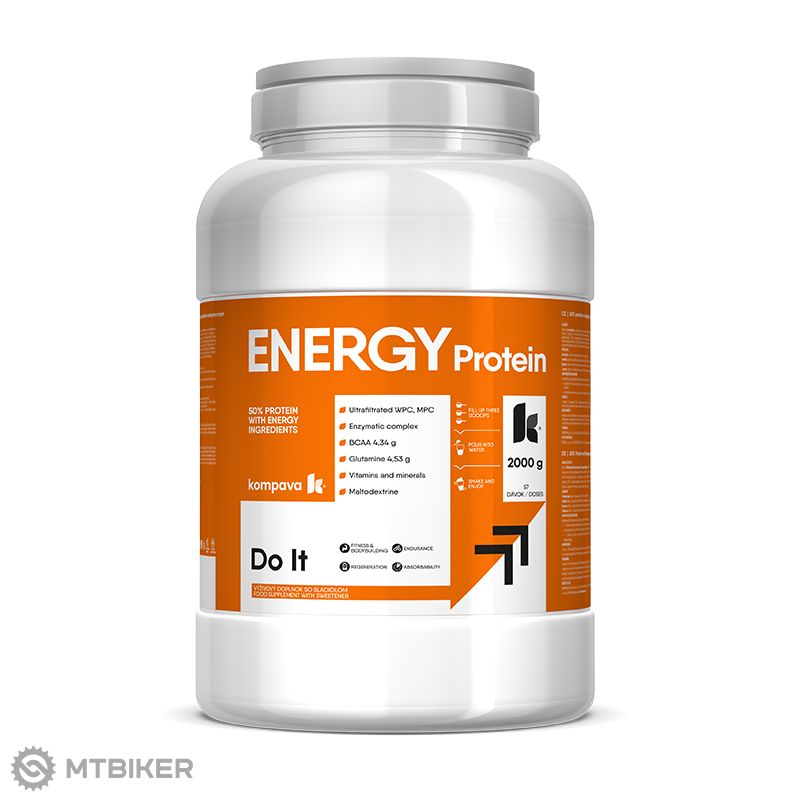




Energy Protein was developed for the needs of athletes and young athletes who consume a lot of energy during their sports performance. If you or your child are involved in cycling, running, football, or other endurance sports, it is important to replenish lost energy and nutrients as soon as possible.
Energy Protein contains 50% protein and 38% carbohydrates, providing the body with a rich source of building blocks and energy. It is enriched with anabolic substances such as L-glutamine and BCAA, which are necessary for muscle mass growth, muscle protection, and recovery after strenuous training, and also provide athletes with the necessary energy. The enzyme complex contained in Energy Protein improves its absorption, the utilization of all nutrients contained therein, and prevents bloating.
What is protein?
It is one of the three basic types of nutrients found in food and essential for the proper functioning of the body. It consists of various amino acids that link chains and form structures called proteins. Proteins play key roles in the body, including supporting growth, tissue regeneration, production of enzymes, hormones, and other biochemical processes.The importance of protein
A balanced diet is very important after sports performance, as it plays a key role in muscle recovery. To restore the body to proper balance, it is necessary to ensure an adequate intake of quality nutrients. Protein is one of the key nutrients you should consume after physical activity.Role of protein:
- Muscle recovery: After training, muscles are often tired and minor damage to muscle fibers may occur. Proteins are the building blocks of muscle tissue and aid in muscle repair and growth.
- Enzyme and hormone synthesis: Proteins are needed for the production of various enzymes and hormones that regulate metabolic processes in the body.
- Energy replenishment: After intense training, the body may be depleted of energy reserves. Proteins can be used to replenish energy reserves in the body.
- Increased satiety: Consuming protein can help maintain a feeling of fullness and prevent overeating later.
Carbohydrates are crucial for sports performance and physical activity. They are an important source of energy for muscles and the brain, and their adequate intake can significantly affect your ability to perform intense training and achieve optimal results.
Role of carbohydrates:
- Energy source: Carbohydrates are the primary fuel for muscles during short-term and intense training. Carbohydrate stores in the body, known as glycogen, are used for rapid energy supply during exercise.
- Improved endurance: For long-term and endurance training, carbohydrates are important for maintaining energy for longer periods. Properly replenished glycogen stores can help delay fatigue and maintain the ability to sustain later physical exertion.
- Support for recovery: After training, carbohydrates contribute to replenishing glycogen stores in muscles and aid in faster recovery.
- Improved brain function: The brain consumes glucose, which is broken down from carbohydrates, for optimal function. Adequate carbohydrate intake can improve cognitive abilities and concentration during training.
- Fatigue prevention: A lack of carbohydrates can cause fatigue, impair performance, and affect the overall quality of training.
Energy Protein contains
Whey protein concentrateWhey concentrate contains a high amount of protein and essential amino acids, making it an effective source of protein. Key benefits include:
- High biological value: Whey protein has a high biological value, meaning it is well utilized by the body for muscle protein synthesis and various metabolic processes.
- Rapid absorption: Whey concentrate is rapidly absorbed by the body, making it ideal for muscle repair and recovery after sports performance.
- Rich in essential amino acids: It contains a high amount of essential amino acids, including BCAAs (branched-chain amino acids), which are important for supporting muscle recovery and growth.
- Muscle mass support: Consuming whey protein can help maintain or increase muscle mass, which is important for athletes and those focused on strength training.
- Convenient protein intake: Whey protein is easy to prepare, can be mixed with water, milk, or added to smoothies, yogurt, or other foods.
It enhances the taste of the protein, while also offering several benefits and properties that can be beneficial for your health:
- Easily digestible: Dried milk may be easier to digest for some people compared to fresh milk.
- Sugar content: It may contain less sugar compared to other types of milk. This can be beneficial for people monitoring their sugar intake or who have diabetes.
- Mineral complex: It contains calcium and other minerals that are important for the health of bones, blood vessels, and the heart muscle. Calcium is known for its role in strengthening bones and teeth.
Maltodextrin provides a long-lasting and stable supply of energy during prolonged training or competitions. After sports performance, maltodextrin is used to rapidly replenish glycogen stores, thereby supporting faster recovery and readiness for further training.
Glucose
Glucose (grape sugar) is the primary source of energy for the body, including the brain. It is important for overall body function, including sports performance – it is rapidly absorbed into the bloodstream, providing the body with an immediate energy supply.
The brain is a very energy-intensive organ and therefore requires a reliable supply of sugar to function properly. Glucose is almost the only source of energy for the brain, unlike other parts of the body that can also draw energy from fat reserves.
Glutamine
L-glutamine is an amino acid that has important roles in the body, especially in muscle tissue and the immune system. L-glutamine is often referred to as the "recovery amino acid" due to its role in repairing and regenerating muscle tissues. It also helps minimize muscle catabolism (the breakdown of muscle tissue for energy), thereby maintaining muscle mass and sports performance.
Glutamine is also an important player in maintaining healthy small intestine function, mucosal integrity, and immune response. Its adequate intake from food is important for maintaining overall digestive system health.
BCAA
BCAAs (up to 5.18g per serving) are a group of three essential amino acids: valine, leucine, and isoleucine. These amino acids have important roles in the body, especially in muscle tissue:
- Muscle recovery support: BCAAs aid in faster recovery of muscle tissues after training.
- Muscle mass protection: During endurance training or muscle activity, muscle catabolism occurs, meaning muscles are broken down for energy. BCAAs protect muscles from breakdown, and thus from overtraining (muscle fever) and damage.
The B vitamins (B6, B2, B1, B12, B9) contained in the protein play an important role in many biochemical processes in the body, including the metabolism of carbohydrates, fats, and proteins. These vitamins also have a significant impact on energy metabolism, the nervous system, and red blood cell production. Since sports performance is often associated with demanding physiological requirements on the body, B vitamins can have a positive impact on sports performance.
Who is the product for:
Energy Protein is suitable for all professional and amateur endurance athletes. Its composition ensures the supply of quality protein, energy, and nutrients that are important for proper body recovery after sports performance. It is suitable for:- Endurance athletes: Active athletes with high energy expenditure need a higher amount of protein to support recovery and muscle growth, and a dose of carbohydrates to replenish energy.
- Fitness enthusiasts: They often need more protein to support muscle mass growth and energy for faster glycogen replenishment.
- Children from 8 years old: The protein is suitable for young athletes as well as children with high energy expenditure. Proteins are important for the proper growth and development of children and adolescents. They ensure the formation of new cells and tissues.
- Beginners: A tasty protein for people starting with sports who want to support muscle mass growth and replenish energy.
- Older adults: With age, muscle mass can be lost and muscle function weakened. Energy Protein helps maintain muscle mass and replenish energy.
- Restrictions: Also suitable for celiacs, people allergic to soy and eggs.
The recommended dosage of the dietary supplement is formulated to take into account the individual needs and characteristics of each organism. We do not focus on a single universal dosage because we know that each of us is unique.
To support muscle mass growth (use on strength training days)
- 2 – 3 servings (1 serving = 3 scoops = 35g)
- use between meals
- suitable to use before training, 1 hour after training, or before sleep
- the maximum recommended amount for muscle mass development is 2g of protein per 1 kg of body weight
- 1 – 2 servings per day (1 serving = 3 scoops)
- use between meals or before sleep
- from 8 to 11 years old: 1 – 2 servings per day (1 serving = 1 scoop)
- from 11 to 18 years old: 2 – 3 servings per day (1 serving = 1 scoop)
Usage
To achieve maximum effectiveness, follow these steps:Preparation: Start by preparing a shaker and the protein package. Inside, you will find a carefully balanced mix of active ingredients ready to provide your body with the necessary nutrients.
Dissolving: Pour 200 ml of clean water into the shaker and add the daily dose of protein using the scoop. The water can be cold or room temperature, according to your preferences, however, cold water may cause poorer solubility. Shake everything together. You can replace water with plant-based or low-fat milk, but for better nutrient utilization, we recommend always preparing proteins with water.
Consumption: After shaking the protein, wait at least 5 minutes before consuming. During this time, all its components will perfectly combine, achieving maximum effect and taste. Enjoy the drink slowly, drink it gradually. This will give your body time to absorb the valuable substances. This process may only take a few minutes, so enjoy every sip.
We recommend consuming Energy Protein before sleep, before training, one hour after training, or between meals. When consuming, follow the recommended dosage according to your preferences.
Remember that regularity is key to success. Adhere to the recommended dosage and consume the drink regularly to achieve maximum results and benefits for your body.
| product ID | 257424 |


All the answers to questions about delivery, payment, security, returns, warranty and much else.












We are the largest cycling e-shop in Slovakia, verified by 100,000+ customers.

We are available via e-mail, online chat, phone or in person at our MTBIKER stores.

Thanks to your order we can support cycling development.

The payment process is safe and we offer you a wide range of options.

We will reward you for your purchase and also for quality contributions in the MTBIKER forum, e-shop, trips and photo gallery.

Visit our store with a pump-track and trail access or our showroom in a historical bulding in central Bratislava.


 arrow_outward

Variant Kompava ENERGY proteín, 2000 g
 spokojny, dobra chut.
Translate by GoogleShow the originalVariant Kompava ENERGY proteín, 2000 g
Variant Kompava ENERGY proteín, 2000 g
Variant Kompava ENERGY proteín, 2000 g