
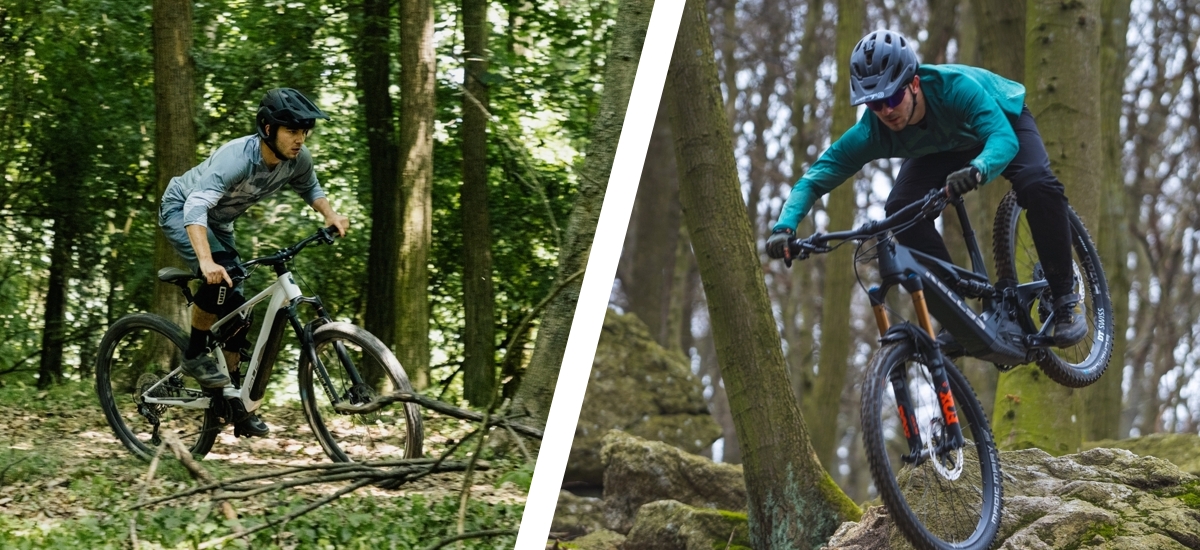
E-bikes for beginners and advanced riders
It has long been clear that electric bikes are no longer just a passing trend. They have become a distinct category of cycling, and their range continues to expand with every season.
An e-bike helps cyclists achieve higher performance. It could be said that the electric motor amplifies pedalling power, allowing for faster rides and more kilometres covered in less time. You become less fatigued and can travel greater distances.However, different e-bikes have different characteristics. A beginner may be looking for something different from an advanced rider. Some riders want quick climbs to maximise downhill riding, while others use an e-bike for all-day adventures.
Nevertheless, the core features of e-bikes remain the same. These are the most important:
Motor Power
I have placed motor power (measured in watts, W) first, as it is closely related to motor torque (Nm). Generally, the higher the numbers, the greater the motor's assistance.

Range – Battery
Battery capacity is expressed in watt-hours (Wh). Again, the higher the number, the greater the capacity and, naturally, the longer the range. Range is primarily influenced by the rider’s weight, the level of assistance used, and factors such as terrain, ambient temperature, headwinds, and more.Control – Display
You can control the electric motor’s assistance and select individual support levels using a simple controller on the handlebars. This basic controller can be supplemented with a display, providing additional functionality.There are also advanced controllers for more demanding users, offering more data, smartphone connectivity, and navigation features.


Integration
For simplicity, integration can be divided into two categories: battery integration and cable integration.Battery integration
If the battery is integrated into the frame, the e-bike looks cleaner and more refined. On the other hand, particularly with lightweight e-bikes (super-light models with lower power and range), the battery is often integrated and cannot be removed.This can be a disadvantage, especially for riders who do not use their e-bike during winter and store it in a cold garage. In such conditions, the battery may degrade more quickly.
Likewise, the battery cannot be removed when transporting the e-bike by air, where batteries are generally not permitted on board, or when staying at a hotel and wanting to charge only the battery indoors. In recent years, however, manufacturers have worked to design e-bikes with batteries that are both removable and integrated into the downtube.


Cable Integration
Cable integration is primarily an aesthetic feature. Few riders want controller cables wrapped around the handlebars or exposed cable housings. By routing cables through the handlebars and headset, for example, the e-bike achieves a cleaner and more elegant appearance.On the other hand, this often requires the use of proprietary components supplied by the bike manufacturer, which may limit replacement options. Home servicing of the e-bike can therefore be more complicated.
Integration can also be found in accessories such as built-in lights and even integrated smartphone chargers.


Weight
Naturally, the addition of an electric motor and battery increases the bike’s overall weight. However, when this weight is distributed effectively—such as with the motor positioned centrally and the battery placed low in the downtube—the e-bike benefits from improved stability.That said, greater weight generally results in less agile handling and reduced riding dynamics. In general, higher battery capacity means greater battery weight, which contributes to the overall weight of the e-bike. Some premium motors can also reduce weight by a few grams without sacrificing performance.
How to choose an e-bike
The characteristics mentioned above should be considered when choosing an e-bike. As with conventional bicycles, it is advisable to first decide what type of riding you plan to do or consult knowledgeable staff for guidance.
Beginner/recreational e-biker
Beginners often choose e-bikes with the goal of achieving the simplest possible operation. Motor power and battery capacity should be appropriate for the rider’s weight and intended use. If the e-bike will mainly be ridden in hilly terrain, higher battery capacity and greater motor torque are recommended.Integration is often an advantage for recreational riders because they do not have to deal with exposed cables and are more likely to use authorised service centres rather than perform maintenance themselves. Integrated lights and other built-in features also add convenience.
The weight of the e-bike largely depends on budget. The larger your budget, the more you can invest in premium materials and components, resulting in a lighter e-bike.
Advanced e-biker
From personal experience, I know that advanced e-bikers tend to use their bikes to their full potential. As a result, they usually prefer higher battery capacity, unless they ride a lightweight e-bike.Naturally, greater motor power provides stronger assistance during acceleration, such as when exiting a corner, which is particularly appreciated by downhill-oriented riders. For cyclists who prefer to service their own e-bike, extensive integration may not be advantageous.
As for weight, the same principle applies as with recreational riders: more premium components generally mean a lighter bike.


Don't overthink it, just ride
Because e-bikes have introduced new specifications and metrics such as watts and Newton metres, riders now have even more opportunities to analyse and compare models, read reviews, and watch test videos.However, this can easily become a rabbit hole. Be cautious of unnecessary speculation, marketing claims, and brand-new products that have not yet been thoroughly tested. So let’s finish with one final piece of motivation: spend less time on screens and more time riding.
💡 Did you know?
In 2023, the first water e-bike was invented in New Zealand. While the experience may be unique, the manufacturer sells this machine for nearly $9,000.
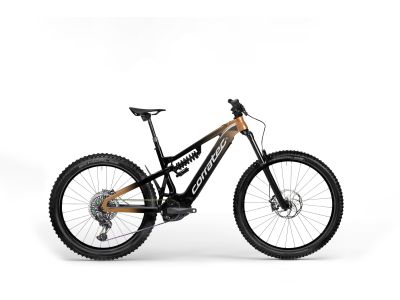
savings Corratec E-Power iLink Factory 29/27.5 e-bike, factory copper/black
4,899 €
savings
RRP 12,990 €
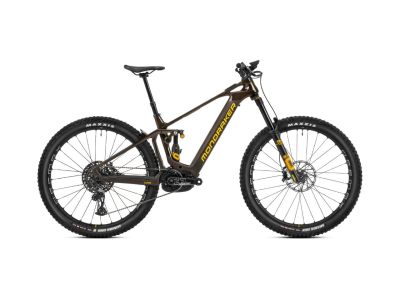
Clearance -35% Mondraker Crafty Carbon XR LTD 29 e-bike, gloss amber carbon/matte amber carbon/yellow
7,799 €
-35%
RRP 11,990 €

Clearance New model -6% Raymon Korak Pro 29 e-bike, pepperwhite/copper
4,699 €
-6%
RRP 4,999 €
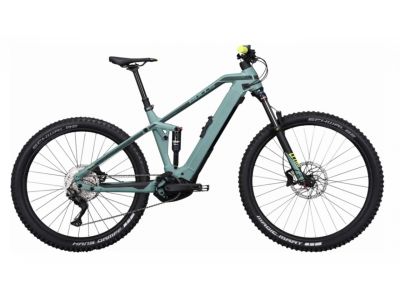
Clearance -18% BULLS Sonic EVO AM1 29/27.5 e-bike, bright emerald
4,099 €
-18%
RRP 4,999 €

 arrow_outward
