
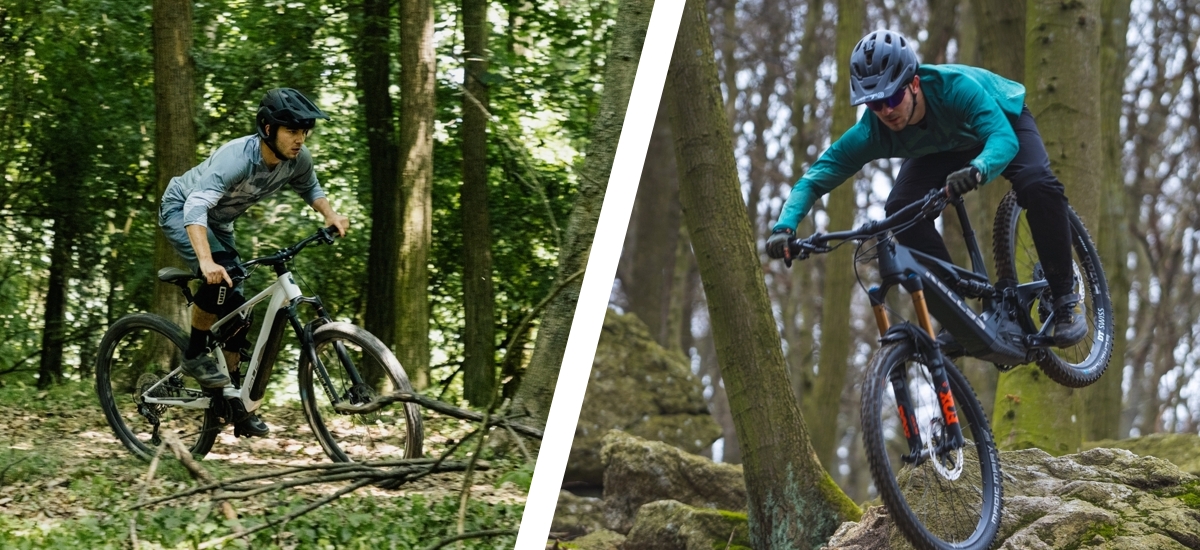
E-bikes for beginners and advanced riders
It's long been established that electric bikes are no longer a new trend. They are a new category of cycling, and their portfolio expands every season.
An e-bike helps the cyclist achieve higher performance. It can be said that the electric motor multiplies the pedalling force, resulting in faster rides with more kilometres covered in less time. You get less exhausted and cover more distance.However, different e-bikes also have different characteristics. A beginner might look for something different than an advanced rider. Some seek a fast climb uphill for the purpose of downhill riding, while others use this machine for all-day trips. However, the core features of e-bikes remain. These are the most fundamental:

Motor Power
I've placed motor power (stated in W) first, which is also related to motor torque (Nm). Generally, the higher the numbers, the greater the motor's assistance.

Range – Battery
Battery capacity is expressed in watt-hours (Wh). Again, the higher the number, the higher the capacity and, naturally, the better the range. Range is primarily influenced by the e-biker's weight, the level of assistance, and among other things, the type of terrain, ambient temperature, headwind, etc.
Control – Display
You can control the electric motor's assistance and select individual levels using a simple controller on the handlebars. This simple controller can be supplemented with a display, which makes it less straightforward.Of course, there are controllers with various functions for more demanding users, displaying more data, and allowing you to pair your phone with the display or use navigation.

Integration
For simplicity, I've divided integration into two parts – battery integration and cable integration.
Battery integration
if the battery is integrated into the frame, the e-bike looks better and neater. On the other hand, especially with light e-bikes (super-light e-bikes with lower power and range), the battery is often integrated and cannot be removed from the bike.This is a disadvantage, especially when the cyclist doesn't ride in winter and stores the e-bike in a garage where the temperature is low. In such a case, the battery can degrade.
Similarly, the battery cannot be disconnected when transporting the e-bike by plane (where they won't allow the battery on board) or if you're at a hotel and want to charge only the battery in your room. In recent years, however, manufacturers have been striving to design e-bikes so that the battery is removable while also being integrated into the downtube.

Cable Integration
Cable integration is also primarily an aesthetic matter. Few people want dangling cables from the controller wrapped around the handlebars or cable housings. Thanks to cable integration, for example, into the handlebars and through the headset, you get a more aesthetic look for the e-bike.On the other hand, you then have to use special components directly from the bike manufacturer, which you often cannot replace with alternatives. Home servicing of the e-bike is more complicated in this case.
Integration can also be found in other e-bike accessories such as integrated lights or even smartphone chargers.

Weight
Naturally, the use of an electric motor and battery increases the overall weight. However, if the weight is utilised wisely, i.e., in the center of the bike (motor) and in the lower part of the downtube (battery), the e-bike will be more stable.However, the higher the weight, the worse the riding characteristics and handling of the e-bike. Generally, the higher the battery capacity, the greater its weight, which affects the overall weight of the e-bike. Also, with some premium motors, you can save a few grams without compromising performance.

How to choose an e-bike
The aforementioned characteristics of e-bikes should be considered, and you should choose according to your preferences. First and foremost, as with regular bicycles, it's advisable to determine the discipline you want to ride or consult with staff.
Beginner – recreational e-biker
Beginners often choose e-bikes with the goal of the simplest possible control. Motor power and battery capacity must be adequate for the cyclist's weight and the intended use. If they anticipate riding the e-bike mainly in hilly terrain, a higher battery capacity and higher motor torque are recommended.
Integration is an advantage for recreational cyclists, as they don't have to deal with protruding cables and will likely use certified service rather than a home workshop. Integrated lights and gadgets are an advantage in this case due to their simplicity. The weight of the e-bike mainly depends on the budget. The fatter your wallet, the more you can pay for premium materials and components, and the e-bike will be lighter.

Advanced e-biker
From my personal experience, I know that advanced e-bikers utilize e-bikes to their full potential. This means they usually look for higher battery capacity (unless it's a light e-bike).Of course, the higher the power, the more the e-bike assists them in acceleration (e.g., in a turn), which is primarily utilised by downhill-oriented cyclists. If cyclists want to service their e-bike at home, integration is not an advantage. Regarding weight, it's the same as for recreational e-bikers - more premium = lighter.

Don't overthink it, just ride
Since e-bikes have introduced new components and figures in the form of watts and Newton meters, riders have even more room for analysis and research of these bikes, reading reviews, and watching test videos.However, it's a bottomless pit into which you can easily dive. Beware of unnecessary speculation and manufacturers' marketing ploys, as well as completely new products that haven't been tested. Therefore, let's end with another motivational sentence - no more screen time, go ride.
Did you know? In 2023, the first water e-bike was invented in New Zealand? While the ride might be interesting, the manufacturer sells this machine for almost $9,000.
Photo source: editorial archive
Similar articles
Shopping for a bike? We'll help you decide whether buying new or used offers better value.
Helmets save lives, there's no doubt about that. But how do you choose a helmet, what types of MTB helmets are there, and what should you focus on when making your selection?
Mountain biking is divided into several disciplines – from casual forest/paved road riding (including uphill sections) to extremely demanding downhill riding. What disciplines are there, and what are they called?
Product selection

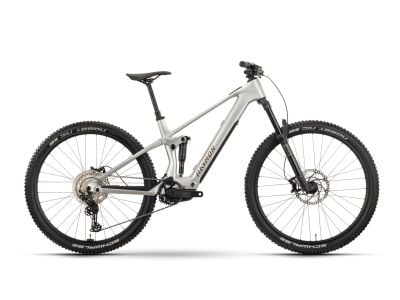
-12% Raymon Airok 29 e-bike, silver stealth/taupe, display piece
4,999 €
-12%
RRP 5,699 €


 arrow_outward
