
Shimano Saint M820 rear hydr. brake Post Mount, black + 1700 mm hose + pads H03C
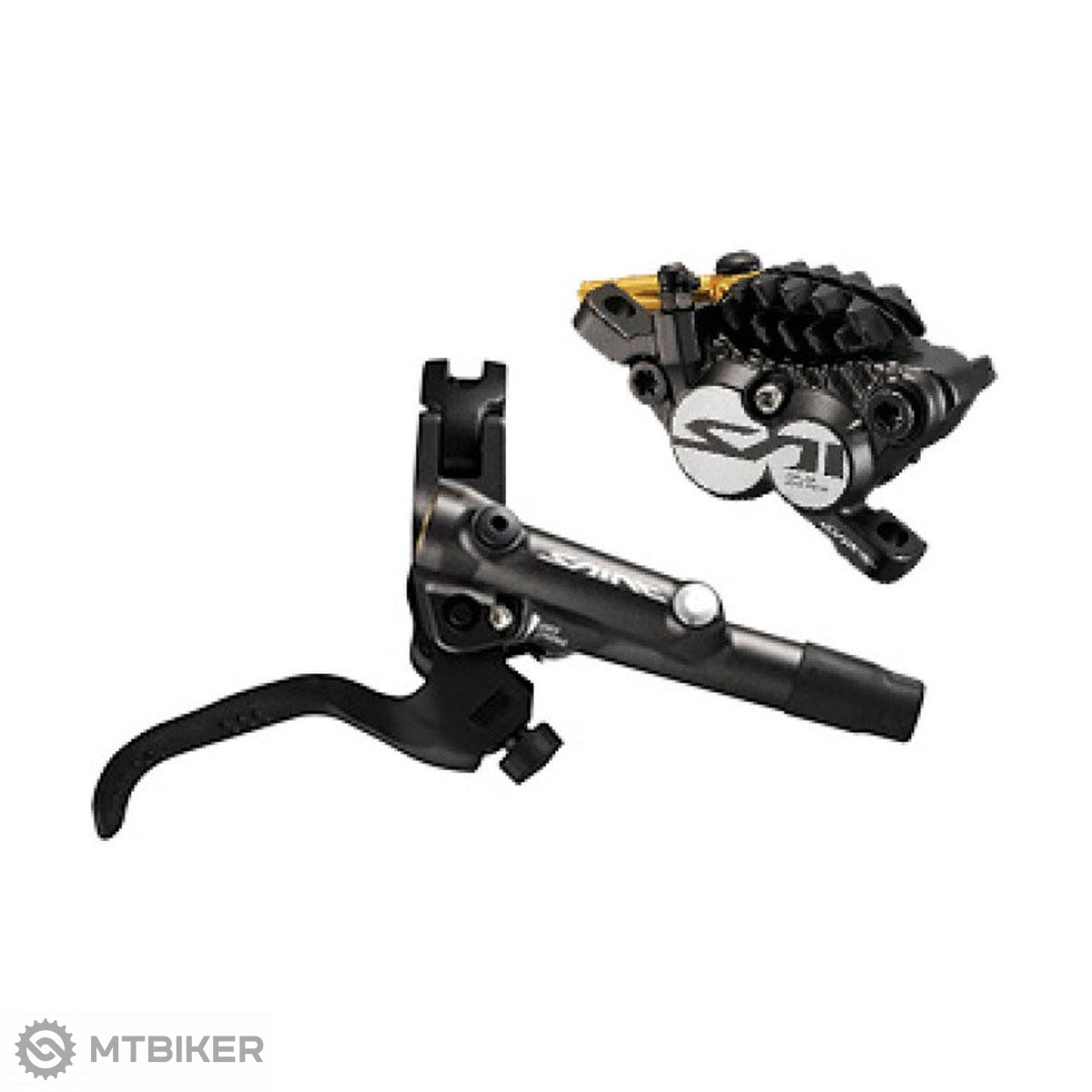




Shimano Saint M820 rear hydr. brake Post Mount. Black + 1700 mm hose + H03C pads
Hydraulic disc brake Saint M820. Consists of lever and caliper M820 and BH90 hose. Brakes are filled with mineral oil and bled. Lever clamp compatible for shifter mounting with I-Spec B mount. H03C brake pads.Also available as front brake.
| Location | Rear |
| Brake type | hydraulic |
| Caliper type | 4-piston |
| Total package weight | 661 g |
| Hose length | 1 700 mm |
| Assembly | Clamp (brake lever), Post Mount (caliper) |
| Material | Aluminium / Steel |
| Package contents | Brake lever, caliper M820, hose BH90, brake pads H03C |
| Brake pads | H03C |
| Brake fluid | Mineral oil |
| product ID | 109385 |

 •
•
 Dobry den, mozete mi prosim odporucit nejaky 180mm kotúč pre tuto brzdu? Mam centerlock. Niekde sa uvadza pri centerlockoch "vnutorne utahovanie" neviem ale presne v com je rozdiel. Robite aj sluzbu skratenie hadicky? Dakujem
 •
•
Dobrý deň, záleží akú máte prednú osku, vnútorné uťahovanie je pre rýchloupinák a 12 mm osky, vonkajšie pre 15 a 20 mm osky. Áno, robíme aj skrátenie hadíc na brzdách.
•
Dakujem. Momentalne mam kutuc sm rt 54, kde je uvedené ze ma vnutorne utahovanie, avsak mne to pripada ze to mam utiahnute vonkajsim sposobom. Je tam taka matica ako na stredy holowtech. Mam ctm scroll expert 2020. Tak som zmateny
 •
•
Dobrý deň,
kotúče sú identické, rozdiel je len v maticiach, takže kľudne môžete mať kotúč SM-RT54 s vonkajšou maticou.
•
Vdaka a zrejme ho budem musiet vymenit ak chcem pouzit tutu brzdu, kedze tam nie su resin platnicky ze? Pozeram ze momentalne je tu len jeden vhodny kotuc? MT800 180mm Center Lock (vonk. uťahov.)? Vdaka
•
Áno, platničky sú metalické, takže pôvodný kotúč nebude vhodný. Je možné kúpiť si kotúč s vnútorným uťahovaním a matice použiť pôvodné s vonkajším uťahovaním.
•
Dobrý deň,
Mal by som záujem o brzdy Shimano Saint vrátane kotúča. Chcel by som si však prejednať veľkosť kotúča.
Týmto Vás chcem poprosiť o kontaktovanie na číslo 0944 265 325.
Ďakujem.
S pozdravom Marek Kováčik
•
Dobrý deň,
uprednostňujeme emailovú komunikáciu, pre konzultáciu nás môžete kontaktovať na [email protected]
•
Dobrý deň, v poriadku. Nedávno som kupoval u Vás bicykel Giant Reign SX 2018. Vzadu je kotúč priemeru 180mm. Je možné a má to zmysel zameniť tento za priemer 203mm? Ak áno viete mi poslať link na nádstavec pod brzdu? Ďakujem.
•
Použitie 203 mm kotúča je samozrejme možné, pokiaľ Vám nepostačuje brzdový účinok 180 mm kotúča, môžete ho skúsiť vymeniť. Pre voľbu adaptéra je potrebné vedieť akú montáž strmeňa máte. PM 160 alebo PM 180? Ak máte PM 160 budete potrebovať nasledovný adaptér https://www.mtbiker.sk/shop/komponenty/brzdy/diely-a-adaptery/shimano-adapter-pm-na-pm-predny-zadny-zo-160mm-na-203mm.html
Pre PM 180 bude vhodný https://www.mtbiker.sk/shop/komponenty/brzdy/diely-a-adaptery/shimano-adapter-predny-zadny-na-kotuc-203mm-pm-pm-180-203.html
•
edit
Dobrý deň chcem sa spýtať chcel by som vymeniť hadice na prednej aj zadnej brzde za hadice jagwire môžete mi prosím nejaké doporucit
 •
•
Dobrý deň,
Quick-fit hadice od Jagwire sú univerzálne (napr.: https://www.mtbiker.sk/shop/komponenty/brzdy/diely-a-adaptery/jagwire-hbk400-hydraulicka-hadicka-quick-fit-cierna.html?preview) - treba akurát vybrať typ pre minerálny olej - keďže sa jedná o Shimano brzdy, potrebujete k danej brzde potom už len príslušný typ koncovky - Pre M820 je to straight-banjo kombinácia, ID výrobku je HFA306 - https://www.mtbiker.sk/shop/jagwire-quick-fit-koncovky-pro-hydraulicky-system-brzd-shimano-mtb.html?preview - žiaľ aktuálne je úplne nedostupný
•
Dobry den.
Daju sa na Sainty kupit uchyt/obimka pre radenie a sedlovku?
•
edit
Radenie je xt sl-m8100, packa na sedlovku je sl-mt500-il
•
Dobrý deň,
Štandardne uchytenie I-Spec B s I-Spec EV nie je kompatibilné ale máme v ponuke takýto adaptér https://www.mtbiker.sk/shop/komponenty/radenie/prislusenstvo/wolf-tooth-shiftmount-i-spec-ev-na-i-spec-ab-adapter-p140108.html ktorý to umožňuje avšak len na pravú stranu - tzn. len radenie. Na ľavú stranu a teda na uchytenie páčky sedlovky na ľavú brzdovú páku adaptér nie je.
•
edit
Viere poradit nejaku packu s objimkou s dobrym pomerom cena/kvlaita? Radenie som nasiel aj na obimke, tak este sa rozhodnem, ci mat dve objimky na pravej strane alebo pouzijem adapter.
Inak nie su v ponuke objimky, ktore by umoznovali napojit packu a radenie s i spec ev uchytom?
Nasiel som akurat identicku packu len na objimku, tak idem objednat https://www.mtbiker.sk/shop/komponenty/sedlovky/diely-a-objimky/shimano-sl-mt500-packa-ovladania-teleskopickej-sedlovky-lava-na-objimku-p121547.html
•
Ahojte.
Ake platnicky odporucate pre Shinano Saint?
•
Ahoj,
napr.overenou volbou su klasika metaliky Shimano:
- https://www.mtbiker.sk/shop/komponenty/brzdy/brzdove-platnicky/shimano-d02s-brzdove-platnicky-metalicke-p8400.html
Z aftermarket modelov potom:
- https://www.mtbiker.sk/shop/komponenty/brzdy/brzdove-platnicky/galfer-fd426-g1554t-pro-brzdove-platnicky-organicke-p99383.html
- https://www.mtbiker.sk/shop/komponenty/brzdy/brzdove-platnicky/sinter-shimano-d-type-brzdove-platnicky-organicke-zelena-p289145.html
•
Dobry den, bude saintova packa sediet so sram radenim?
•
Dobrý večer prajem,
páka je defaultne kompatibilná s uchytením radenia so Shimano I-Spec B úchytom.
Aké máte radenie? Ak ho máte s uchytením na samostatnej objímke, tak by samozrejme nemal byť problém napasovať ich na rajdy vedľa seba..
•
Zdravim, cely set neplanujete zaradit do ponuky ?
•
Dobry den,
standardne su Shimano brzdy vo vacsine pripadov dostupne ako samostatne predne/zadne modely (bez kotucov), podobne aj v tomto pripade, cely set P+Z v ponuke nasich dodavatelov aktualne nie je.
WARNING
For information on the installation, adjustment and replacement of the products which are not to be found in the user's manual, please consult the place of purchase or a distributor. A dealer's manual for professional and experienced bicycle mechanics is available on our website (https://si.shimano.com).
For safety, be sure to read this "user's manual" thoroughly before use, follow it for correct use, and save it so that you can refer back to it at any time.
The following directions should always be followed in order to prevent personal injury, damage to equipment or damage to the surroundings. The directions are classified according to the degree of danger or damage which may occur if the product is used incorrectly.
DANGER - Failure to follow the directions will result in death or serious injury.
WARNING - Failure to follow the directions could result in death or serious injury.
CAUTION - Failure to follow the directions could cause personal injury or physical damage to equipment and the surroundings.
WARNING
- Because each bicycle may handle differently depending on the model, learn the proper braking technique (including pressure on the brake lever and bicycle control characteristics) and operation of your bicycle. Improper use of the bicycle's brake system may result in a loss of control or falling, which could lead to serious injury.
- Do not disassemble or modify the product. It may cause the product to not operate correctly, and you may fall unexpectedly and be seriously injured.
- Downhill riding and freeriding are inherently dangerous activities. It is strongly recommended that riders wear head and body protection gear and perform thorough safety inspections of their bicycles before each ride. Remember that you ride at your own risk and therefore your experience and abilities should be carefully considered. There is a risk that you may be involved in an accident resulting in serious injury or death.
- Before riding the bicycle, riders must become accustomed to the increased performance of this brake.
- The brake system is designed for downhill riding and freeriding, and its braking force is much higher than that of other brakes. If you do not familiarize yourself with the performance level of this brake, you may be involved in an accident resulting in serious injury or death. In addition, the brake settings do not allow for riding on city streets. Sudden braking may cause the bicycle to pitch forward, which may result in serious injury or death.
- 203 mm and 180 mm disc brake rotors provide greater braking force than 160 mm disc brake rotors. If you ride the bicycle without thoroughly familiarizing yourself with the braking characteristics, braking may result in falling off of the bicycle with the possibility of serious injury or a fatal accident.
- In addition, be very careful to keep your fingers away from the rotating disc brake rotor. The disc brake rotor is sharp enough to cause serious injury to your fingers if your fingers get caught in the openings of the moving rotor.
- Do not touch the calipers or disc brake rotor during or immediately after riding the bicycle. The calipers and disc brake rotor become hot during braking, so you may be burned if you touch them.
- Be careful not to get any oil or grease on the disc brake rotor and brake pads. If the bicycle is ridden with oil or grease on the disc brake rotor and brake pads, the brakes may not work, and serious injury could result from falling or collision.
- Check the brake pad thickness and do not use the brake pads if they are 0.5 mm or less in thickness. Doing so may cause the brakes to not work, and serious injury could result.
- Do not use the disc brake rotor if it is cracked or deformed. The disc brake rotor may break, and serious injury could result from falling. Replace the disc brake rotor with a new one.
- Do not use the disc brake rotor if its thickness is 1.5 mm or less. Also, do not use it if the aluminum surface is visible. The disc brake rotor may break, and serious injury could result from falling. Replace the disc brake rotor with a new one.
- Do not apply the brakes continuously. Doing so may cause a sudden increase in the brake lever stroke, causing the brakes to not work, and serious injury could result.
- Do not use the brakes if there is any fluid leakage. Doing so may cause the brakes to not work, and serious injury could result.
- Do not apply the front brake too strongly. If you do so, the front wheel may lock and the bicycle may topple forward, causing serious injury.
- Because the required braking distance will be longer during wet weather, reduce your speed. Apply the brakes early and gently. You may fall or collide and be seriously injured.
- A wet road surface can cause the tires to lose traction. To prevent this, reduce your speed and apply the brakes early and gently. If the tires lose traction, you may fall and be seriously injured.
CAUTION
„- Cautions regarding SHIMANO genuine mineral oil
- When handling, wear suitable eye protection to prevent it from getting into your eyes. If it gets into your eyes, flush the eyes with clean water and immediately seek medical attention. Contact with the eyes may cause irritation.
- Wear protective gloves during handling. If it gets on your skin, wash it off thoroughly with soap and water. Contact with the skin may cause rashes and difficulty.
- Protect your nose and mouth with a protective breathing mask, and use in a well-ventilated room. Inhaling mineral oil vapor or fumes may cause nausea.
- If you inhale mineral oil vapor or fumes, move to a place where there is fresh air. Cover yourself with a blanket. Keep warm in a stable position and immediately seek professional medical attention.
„ Break-in period
- Disc brakes have a break-in period, and the braking force gradually increases along with the increasing break-in period. Make sure that you avoid any such increases in braking force while using the brakes during the break-in period. The same situation occurs when the brake pads or disc brake rotor are replaced.

Average brand rating in the category
 Most popular brand

All the answers to questions about delivery, payment, security, returns, warranty and much else.
savings Shimano SLX M7120 rear hydraulic 4-piston disc brake, Post Mount, 1700 mm + N03A brake pads
109 €
savings
RRP 169 €
Clearance SRAM G2 RS hydr. rear brake, Post Mount, 1 360 mm hose, from a new bike
129 €
RRP 169 €
savings MAGURA MT7 Pro 1-finger HC hydraulic brake, 4 piston, front/rear
166.99 €
savings
RRP 239 €

-14% Shimano Deore XT BL-M8200/BR-M8220 hydraulic rear brake, 4-piston, 1,700 mm + pads
179 €
-14%
RRP 239 €

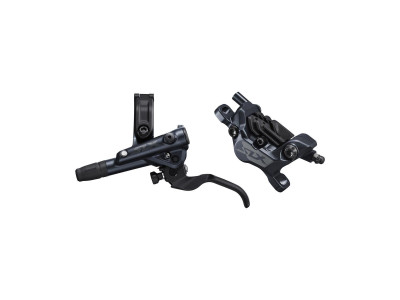
savings Shimano SLX M7120 front disc brake 4-piston caliper, Post Mount, 1000 mm + N03A brake pads
109 €
savings
RRP 169 €
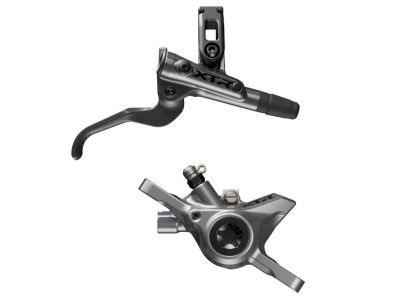
-13% Shimano XTR BL-M9200/BR-M9200 hydr. rear brake, Post Mount, 1 700 mm hose + pads
209 €
-13%
RRP 279 €

We are the largest cycling e-shop in Slovakia, verified by 100,000+ customers.

We are available via e-mail, online chat, phone or in person at our MTBIKER stores.

Thanks to your order we can support cycling development.

The payment process is safe and we offer you a wide range of options.

We will reward you for your purchase and also for quality contributions in the MTBIKER forum, e-shop, trips and photo gallery.

Visit our store with a pump-track and trail access or our showroom in a historical bulding in central Bratislava.





 arrow_outward

 Santa cruz 5010, SM-RT 905 tárcsával super. Fémes betéttel adják, de nekem lehet elég lesz egx organikus is. De várok míg bekopik teljesen. Nem bántam meg.
Translate by GoogleShow the original Prosím Simon vymen
Translate by GoogleShow the original Top brzda až na búchanie platničiek
Translate by GoogleShow the original Tak to sú najhoršie brzdy lebo kamarát nechce vymenit
Translate by GoogleShow the original Felsőkategórias
Translate by GoogleShow the original Mam Sainty na dvoch bajkoch, presiel som na ne z Magura MT5 kvoli lepsej jedno-prstovej packe a kvoli tomu, ze mi Magury casto v zime "vyfucali". Zadne Sainty mi vsak tiez casto stracaju tlak, musim obcas odvzdusnit (predne su OK). Na zadnych brzdach ide packa na prve stlacenie trochu hlbsie k riaditkam, az na tretie rychle "napumpovavacie" stlacenie ma uz brzda zahryz tam, kde ho chcem mat. Kvoli tomu zrejme vyskusam namontovat vzadu Magura MT7, ci to nebude lepsie. Zatial ma nesklamala iba stara Deore, ktoru som jazdil asi 5 rokov uplne bez servisu (iba menil platnicky).
Translate by GoogleShow the original