
Shimano STEPS BTE8016 flashlight holder for frame without lock with cable 300mm black
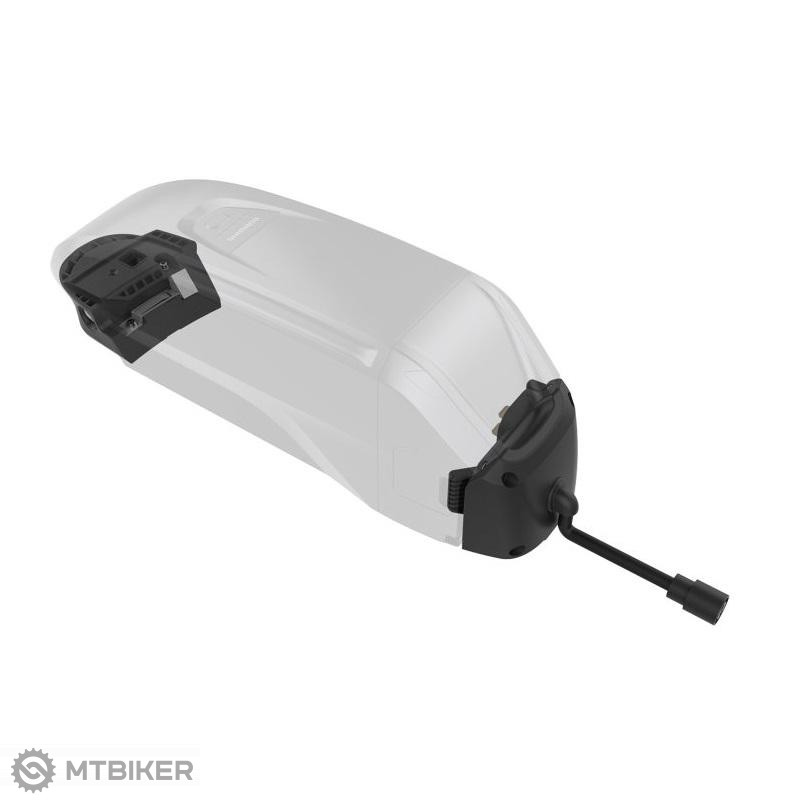




Flashlight holder STEPS BT-E8016. Designed for mounting on the lower frame tube. Compatible with Axa, Abus and Trelock locks (the lock is not part of the package). Cable: black, 300mm long.
| product ID | 118303 |

WARNING
For information on installation, adjustment and replacement of the products which are not found in the user's manual, consult the place of purchase or a distributor. A dealer's manual for professional and experienced bicycle mechanics is available on our website (https://si.shimano.com).
For safety, be sure to read this “user's manual” thoroughly before use, follow it for correct use, and save it so that you can refer back to it at any time.
The following instructions should always be followed in order to prevent personal injury, physical damage to equipment and damage to the surroundings. The instructions are classified according to the degree of danger or damage which may occur if the product is used incorrectly.
DANGER - Failure to follow the instructions will result in death or serious injury.
WARNING - Failure to follow the instructions could result in death or serious injury.
CAUTION - Failure to follow the instructions could result in personal injury, or physical damage to equipment and surroundings.
DANGER
Handling the battery
- Use the specified battery charger for charging, and observe the specified charging conditions. Otherwise, overheating, bursting, or ignition may occur.
- Do not leave the battery near heat sources such as heaters. Otherwise, it may burst or ignite.
- Do not heat the battery or throw it into a fire. Otherwise, it may burst or ignite.
- Do not deform, modify, or disassemble the battery; also, do not directly apply solder to the battery terminals. Otherwise, liquid leakage, overheating, bursting, or ignition may occur.
- Do not short-circuit the terminals with metallic objects. Otherwise, short-circuiting or overheating may occur, resulting in burns or other injury.
- Do not carry or store the battery together with metallic objects such as necklaces or hairpins. Otherwise, short-circuiting or overheating may occur, resulting in burns or other injury.
- Do not immerse the battery in fresh or salt water, and do not allow the battery terminals to get wet. Otherwise, overheating, bursting, or ignition may occur.
- Do not subject the battery to strong shocks or throw it. Otherwise, overheating, bursting, or ignition may occur.
- If the battery catches fire, take the following measures:
If possible, carefully keep other batteries away from the fire.
Evacuate all persons from the immediate area of the fire.
Extinguish the fire with large amounts of cold water (at least 10 times the weight of the battery pack).
Handling the battery charger
- Do not disassemble or modify the battery charger. Failure to follow this may result in electric shock or injury.
- Use the specified battery and charger combination for charging, and observe the specified charging conditions. Only charge rechargeable batteries. Otherwise, overheating, bursting, or ignition may occur.
- If the battery is not fully charged even after charging for 2 hours after the specified charging time, immediately disconnect the battery from the electrical outlet and contact the place of purchase. Otherwise, overheating, bursting, or ignition may occur.
Refer to “Specified charging time.”
- Do not allow the battery charger to get wet. If it gets wet or water gets inside, ignition, overheating, or electric shock may occur.
- Do not use it while wet, and also do not touch or hold it with wet hands. Electric shock may occur.
- Do not cover the battery charger with cloths or other similar materials during use. Otherwise, heat buildup may occur, resulting in deformation of the case, fire, ignition, or overheating.
- Only use the battery charger at the specified power supply voltage. If the power supply voltage is anything other than the specified value, fire, explosion, smoking, overheating, electric shock, or burns may occur.
WARNING:
Handling the battery
- Use the product under the supervision of a person responsible for safety and only according to instructions. Do not allow anyone (including children) with reduced physical, sensory or mental ability, or persons without experience or knowledge to use the product. Do not allow children to play near the product.
- Keep out of reach of children.
- If liquid leaking from the battery gets into the eyes, immediately rinse the affected area thoroughly with clean drinking (tap) water without rubbing the eyes, and immediately seek medical attention. Failure to do so may result in damage to your eyes from the battery liquid.
- If leaking liquid gets on your skin or clothing, immediately wash it off with clean water (wash for at least 15 minutes). The leaking liquid may damage your skin.
- Medical attention is required for symptoms caused by accidental ingestion of battery liquid, contact with skin or eyes, or inhalation of battery combustion products.
- If you accidentally inhale fumes or vapors, immediately move to a place where there is fresh air, keep warm and quiet, and seek expert medical attention if necessary.
- Do not use the battery outside of the specified operating temperature range. If the battery is used or stored at temperatures outside of these ranges, fire, battery damage, or problems during operation may occur.
1. During discharge: -10 – 50 °C
2. During charging: 0 – 40 °C
Temperatures above 60 °C may cause leakage and bursting of the battery.
- Do not use the battery if there are noticeable scratches or other external damage. Failure to follow this may result in bursting, overheating, or problems during operation.
- Do not use products with broken seals. Immediately hand them in for appropriate recycling. (Screw heads on the cover are sealed with adhesive or a cover.)
- Do not use the battery if it exhibits liquid leakage, discoloration, deformation, or other abnormalities. Failure to follow this may result in bursting, overheating, or problems during operation.
- Batteries must not come into contact with solvents (i.e. thinners, alcohol, oil or anti-corrosion agents) or chemicals that affect the surface (i.e. cleaning agents).
Handling the battery charger
- When connecting or disconnecting the cable, hold it by the mains plug. Failure to do so may result in fire or electric shock.
- If any of the following symptoms occur, stop using the device and consult the place of purchase. Fire or electric shock may occur.
If pungent smoke comes out of the mains plug or the plug heats up.
There is a poor connection inside the mains plug.
- During a thunderstorm with lightning, do not touch the metal parts of the mains plug or AC adapter. Electric shock may occur due to lightning strike.
- Do not overload the electrical outlet with appliances that exceed the outlet's rated capacity, and only use a 100 – 240 V AC rated AC power supply outlet. Overloading the electrical outlet by connecting a large number of appliances using adapters may cause overheating resulting in fire.
- Do not damage the mains cable or mains plug. (Do not damage them, modify them, forcibly bend them, twist or pull them, place them near hot objects, place heavy objects on them, or tie them tightly together.) If used in a damaged state, fire, electric shock, or short-circuiting may occur.
- Do not use the battery charger in conjunction with commercially available electrical transformers designed for use overseas (travel converters). This may cause damage to the battery charger.
- Always insert the mains plug all the way in. Failure to do so may result in fire.
- Do not insert or remove the plug when it is wet. Otherwise, electric shock may occur. If water is leaking from the plug, thoroughly dry it before inserting it.
- Do not charge the battery in damp locations or areas with high humidity. (EC-E8004) Do not charge the battery in damp locations, areas with high humidity, or outdoors. (Battery charger other than EC-E8004) Fire, ignition, overheating, or electric shock may occur.
- Do not move the bicycle while charging the battery that is installed on the bicycle. The mains plug of the battery charger may come loose and may not be fully inserted into the electrical outlet, which poses a risk of fire.
CAUTION
Handling the battery
- Do not leave the battery in a place exposed to direct sunlight, inside a vehicle on a hot day, or in other hot places. This may result in liquid leakage from the battery.
- Avoid large changes in temperature.
- Do not store this product near open flames or food.
- Store the battery in a dry location.
- Handle the components with both hands. Otherwise, the components may fall and break or cause injury.
- If an error occurs during charging or discharging of the battery, immediately stop using it and read the user's manual. If you are unsure, contact the place of purchase or a distributor.
- Do not touch the battery for a long time when it is at a high temperature. This may cause low-temperature burns. Riding with a high assist level on hot days or charging the battery in direct sunlight may cause the surface temperature of the battery to exceed 60 °C (BT-E8036).
Handling the battery charger
- Inspect the battery charger and adapter regularly; pay particular attention to damage to the cable, plug, and casing. If the charger or adapter is damaged, do not use them until they have been repaired at the place of purchase or by a distributor.
- Use the product under the supervision of a person responsible for safety and only after receiving instructions regarding its use. Do not allow the product to be used by persons with reduced physical, sensory or mental abilities, inexperienced persons, or persons without the required knowledge. Do not allow children to play near the product.
- When cleaning, pull the mains plug out of the electrical outlet and the charging plug out of the battery. Failure to do so may result in electric shock.
- Do not touch the battery charger when it is at a high temperature. This may cause burns.
- Do not touch the battery charger for a long time when its temperature has increased. This may cause low-temperature burns.
- The temperature of the product may reach 40 to 70 °C during charging. However, this is normal.
- Before using the battery charger, read all instructions and warning markings on the battery charger, battery, and product using the battery.


All the answers to questions about delivery, payment, security, returns, warranty and much else.

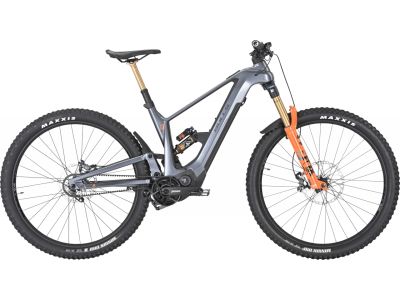

savings Raymon Hardray Select 29 e-bike, mint/jade/cotton
1,699 €
savings
RRP 3,199 €
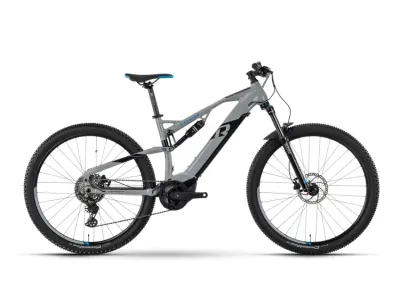
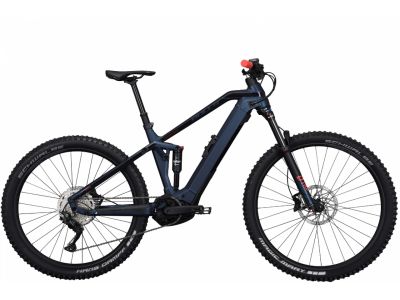
savings Raymon FullRay 130E 5.0 29 e-bike, grey/black/newblue
2,199 €
savings
RRP 3,699 €

We are the largest cycling e-shop in Slovakia, verified by 100,000+ customers.

We are available via e-mail, online chat, phone or in person at our MTBIKER stores.

Thanks to your order we can support cycling development.

The payment process is safe and we offer you a wide range of options.

We will reward you for your purchase and also for quality contributions in the MTBIKER forum, e-shop, trips and photo gallery.

Visit our store with a pump-track and trail access or our showroom in a historical bulding in central Bratislava.

 arrow_outward

There are currently no reviews