

How to choose a better road bike - when you crave the road
What to focus on and how to choose a new road bike, so it meets your expectations to a T.
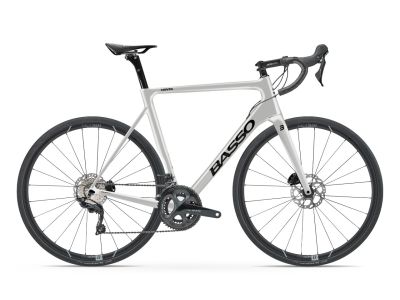
Let's look at a situation where you might want to acquire better equipment in the form of a better road bike. This situation doesn't necessarily mean you've decided to start racing. It just means you've tried out your first basic road bike and found that you enjoy road cycling, and now you want to continue enjoying it on better 'iron'.
Expectations
It's good to clarify what you expect from the purchase beforehand; it will help with the selection later. There can be several reasons.Some buy a better bike because they want to be faster, either in Strava segments or in a duel with a training partner. Others chase seconds because they've started racing and want to translate their training into overtaking rivals. There are also those who simply want a better feeling in the saddle of a higher-quality bike and, thanks to that, want to be able to ride even longer distances.

And it's perfectly fine if you just want to enjoy a higher-quality, better-engineered product that won't require as much maintenance, e.g., due to ageing components. These are all understandable reasons for a purchase, and depending on which one is most important to you, you will orient yourself when choosing a specific brand, model, design, equipment, and accessories.

Try, try, try
If you relied on friends' or salespeople's advice for your first road bike, you've learned a lot by now and have a much better and more precise idea of what you want. I'm not saying advice isn't useful, which is why I'm writing this article. 🙂For this reason, before buying a new and more expensive bike, I would go to test days where you have the opportunity to ride the bike. You don't need long hours in the saddle to understand how it handles, how stiff it is, and how it filters out bumps, and you'll get a basic idea quite quickly.

However, test days are only a few times a year, if at all, and not for all brands. Then it must suffice to find someone in your area who owns the bike you've set your sights on and borrow it for a while. If it's also the same size, you're lucky, but don't mess with their bike fit without permission, most people are sensitive about that.
Even if you don't ride with the saddle height precisely adjusted, you'll get a basic feel. And if you can't find such a friend, then reading reviews from reliable sources remains.

Aero, Climber, or Endurance
As I mentioned at the beginning, you don't have to buy a new bike just because you want to race. Since you've already had your initial introductions to road cycling, you've gotten to know yourself and it's easier to decide which type of road bike suits you.If you prefer long, relaxed rides, an endurance bike will serve you well. If you prefer riding in the mountains, then go for a lightweight model. If you've started participating in a cycling league where the courses are more classic and without long climbs, and you've enjoyed overtaking rivals, then an aero bike is for you.


If you don't have a strong preference for a particular riding style, then you're buying a new road bike at the right time.
I feel that the number of versatile bikes offered by brands is increasing, often combining climber and aero models into one. Even if they are separated, modern classics now commonly feature aero elements, even in the mid-range, with hidden cables and similar features.
Or, on the other hand, an aero model has a decent weight and can be quite comfortable.
By the way, this was the first thing that surprised me when I changed my road bike after 5 years; I didn't expect carbon to absorb shocks so beautifully, but that's for the next paragraph.
Carbon and only carbon
While aluminium was sufficient for the first road bike, here I would only filter for carbon models when viewing the shop's offer.Yes, there are still excellent AL frames, the CAAD series from Cannondale immediately comes to mind, but that's more of an exception.
With carbon, a simple rule applies: not all carbon is created equal. The differences can sometimes be breathtaking; one bike transmits every tiny bump you ride over on the road, while another smooths things out beautifully, leaving your back pain-free and you less tired. Just because a frame is made of carbon doesn't automatically mean brutal stiffness.
Production costs can be cut here too, and if you don't detect it beforehand, you risk feeling the bottom bracket of the frame flex sideways under your feet during an acceleration. A good point is to focus on how to recognise this beforehand, and that brings us back to the beginning, where I write about test days, trying things out, or at least reviews.


Size working for you
Choosing the right size will be easier now than in the very beginning. You have some experience with a specific size from a certain brand, which is a good starting point. For orientation, you will still use size charts, and some brands even offer an online configurator where they ask for your leg or arm length.Most riders can fit into two sizes, depending on their body proportions and riding requirements.
For example, if you have shorter legs, you might prefer a smaller size and replace the stem with a longer one on your new bike. This is often the preference of racers; a smaller road frame offers a greater drop, making the riding position more aggressive. A larger frame, on the other hand, will be more comfortable and calmer in a straight line.

A good help can be to get measured as part of a Bikefitting; it's more precise than doing it at home, and you can use this data to choose the ideal size.
During this measurement, if you decide to do it at MTBIKER, we usually chat with the customer about their intentions and look at brand offers together. Then it's up to you whether you also have the riding position adjusted on your new machine after purchase; there's no need to measure a second time, as we'll use the data we already have. Unless you waited so long that you've shrunk with age. 🙂


Groupset
This point will probably be the easiest. If for the first bike I'd recommended a basic but branded groupset that at least works well, here we move up a level.We'll move, for example, to Shimano 105 or Ultegra. Perhaps the time has come for your first electronic shifting; wireless Sram Force is now more accessible than the RED groupset was initially. Such a higher-end groupset will offer you more gears, finer gradation, smoother and more precise operation, some weight savings...
What I wouldn't push for in such a case is a top-tier groupset. It would work beautifully and have excellent weight, but its maintenance is significantly more expensive. Not to mention, if you 'crashed' it somewhere and had to buy a new component, you'd find that the price jump is substantial.
But if you want to treat yourself and the budget allows, why not? We only live once.


How many teeth?
For the first bike, the smallest chainring alternative, compact (50/34), serves super well. It's good to get used to high-cadence pedalling, which is also how youngsters start. Feel free to stick with this choice if you're more of a high-cadence type.If you feel like chasing a bit, I'd go for a semi-compact (52/36). If you've decided on amateur racing, I wouldn't be afraid of the 'manly' alternative with a 53-11 gear option.
In races, it can be a knockout criterion when you're catching someone on a descent, or if there's a sprint with a tailwind or slightly downhill.
If you're worried about the small 39-tooth chainring, I bought a cassette with a 32-tooth cog for my training wheels, and for Bormio, I swapped the small 39-tooth chainring for a 36-tooth one. Just be careful if your groupset can handle it; you need to check the manufacturer's description. Shimano, I believe, doesn't even list it as an option, so it's at your own risk. 🙂 And oval chainrings are a separate chapter; shifting there is even more sensitive.


Proper wheels
Along with the frame, the wheels will have the biggest impact on your riding feel and performance. In the mid-range category of bikes, you'll most likely find some cheap aluminium alternative on a new bike. This is to keep the bike's price down, and also because everyone wants to buy proper wheels according to their own taste.This is what the carbon wheel offer in the shop looks like.
Tires, Tubulars, Tubeless?
I've been riding tubulars in races for a long time. I still believe it's the best alternative for racing.What I have changed, however, is that I've acquired another pair of wheels for training, this time clinchers. I've put on 28 mm wide gravel tubeless tires, and thanks to that, I can now enjoy worse roads, fire roads in the forests, and various embankments without fear.
The goal is to avoid traffic and also to vary my training around home a bit. This way, I'm not afraid to venture into places where I wouldn't have dared with tubulars.
So the recommendation is, if you ride more, two pairs of wheels will come in handy: one for racing or Sunday rides, and another for winter or such exploratory rides. It also has the advantage that if one pair gets damaged somehow, even by just one pothole, you don't have to take an unwanted break from riding.


Only discs now
Time has shown that the shift to disc brakes on road bikes was the right one. It's clear they brake better, and I was also surprised by the overall stiffness; the thru-axle connection is stronger than a quick release.You should only go for regular brakes on such a more expensive mid-range bike if you come across a super deal, like a 50 % discount on a new bike or similar. Otherwise, I would only look for disc brakes.
If you're not buying a bike for life, one with disc brakes will also be easier to sell later. In the shop, you can easily filter the offer by brake type.


I wrote these recommendations based on what has been working for me. I understand that riders' preferences can vary, and thus their perspectives. The other thing is that I also see how my own opinion can evolve.
Photo source: editorial archive
Similar articles
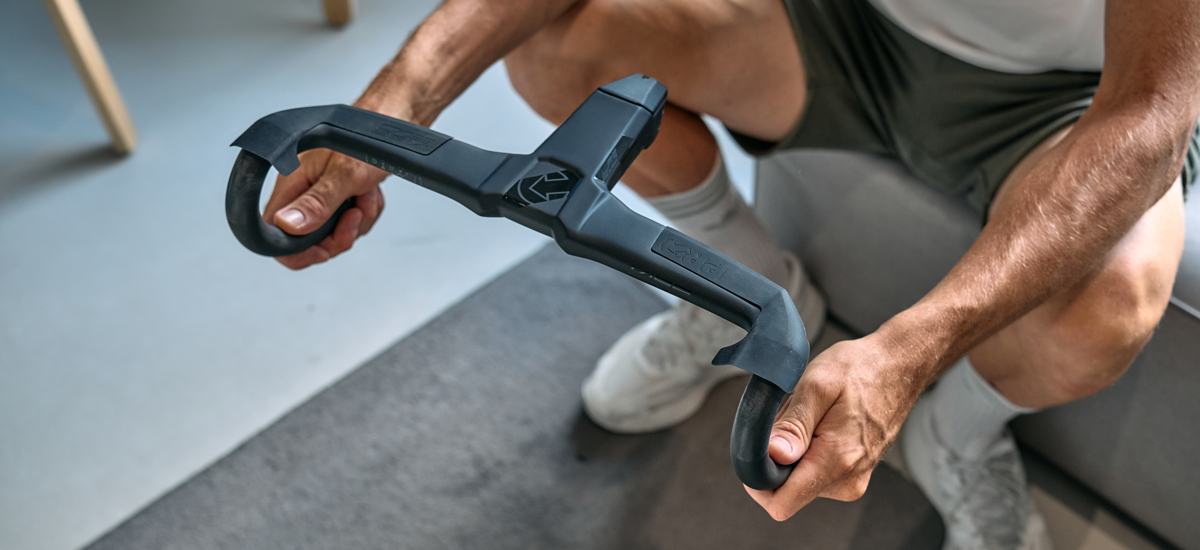
Road or gravel handlebars are more important than they might seem. They affect riding position, comfort, ergonomics, and performance. Good design is a plus as well.

Is an endurance road bike just what the average 'hobbyist' needs?
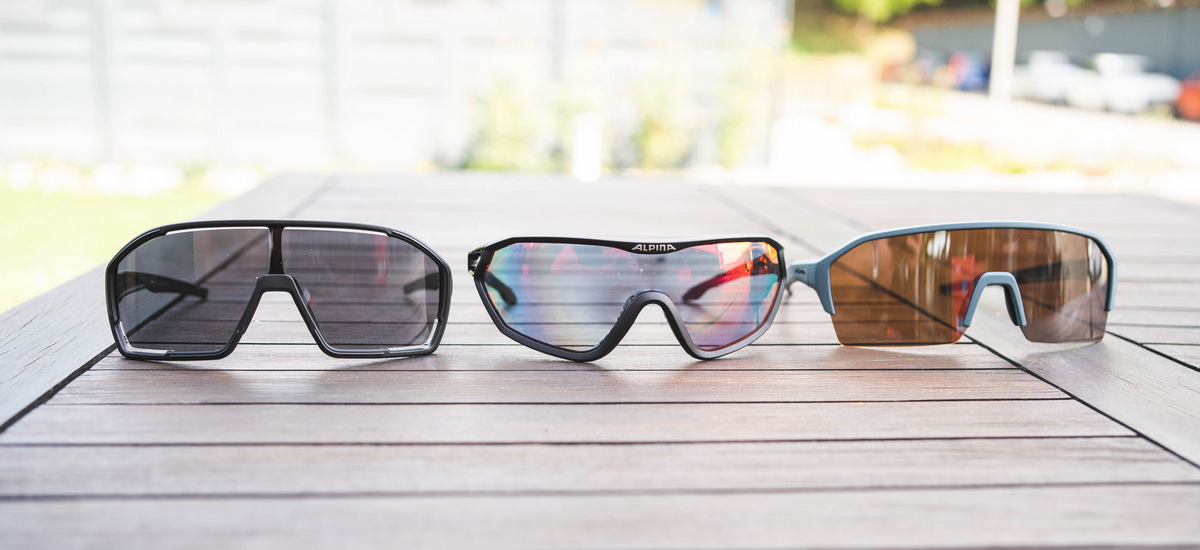
The selection is vast, prices are diverse, and the versions of cycling glasses are endless. How do you make sense of it all and choose the right ones?


 arrow_outward
