
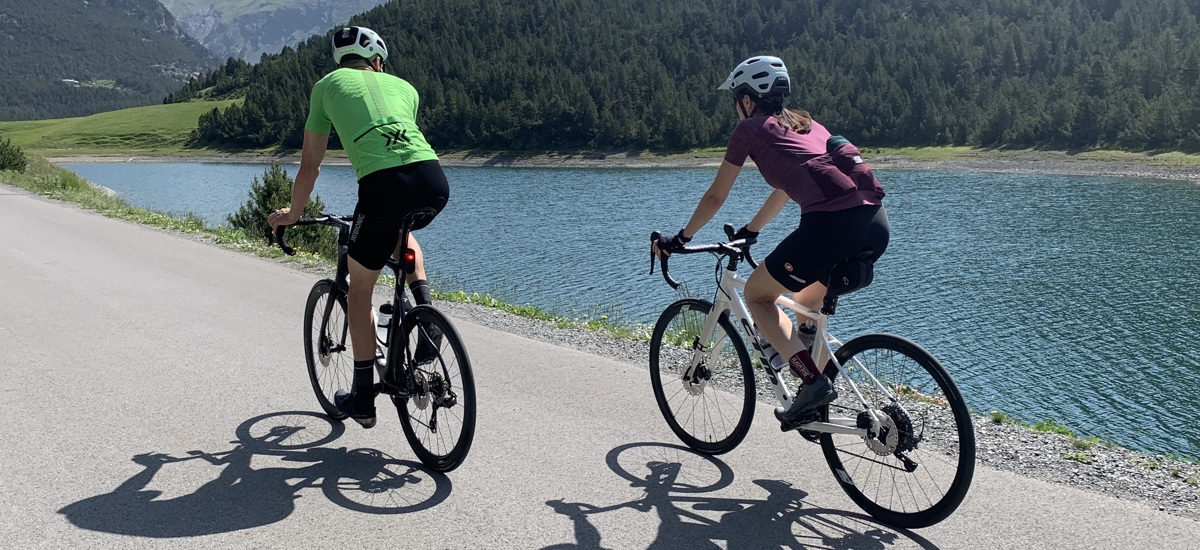
Gravel, road, trekking – what do they offer?
A road bike is built for speed on asphalt. But can a gravel or trekking bike offer a similar, if not identical, performance?
Outwardly different bikes, yet they still share certain common features. A complete beginner in the world of cycling might hesitate as to which type of bike would truly be the “right fit” for them.On one hand, we have the pure speed of a road bike, on the other, the versatility and multifaceted nature of a gravel bike. The trio is completed by trekking bikes, which, with their concept, carve out “their own league.”
Which cyclist will most appreciate which type of bike?

Gravel – a world of simplicity and versatility
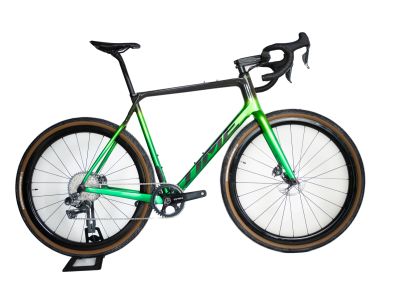
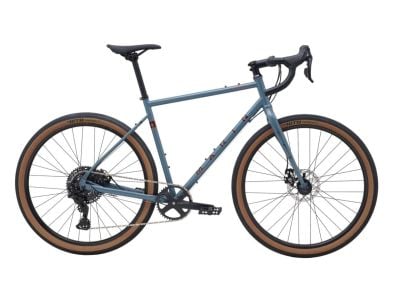
Let's start by defining for whom a gravel bike might be a better alternative – at least compared to a road bike. Some people aren't fans of perfect Austrian-style asphalt and occasionally like to “cut a corner” on a broken road. For them, wider road tires are sufficient.
But if you don't plan to ride challenging terrain and want one bike “for everything,” a gravel bike can be an ideal choice. Its main advantage is that, unlike a road bike, the cyclist is not bound by asphalt. Compared to a mountain bike, you can also expect weight savings, better aerodynamics, and simpler maintenance.
The equation is simple – the more moving parts something has, the more maintenance it requires, and the more things can go wrong.
Moreover, today's gravel bikes are partly catching up with their MTB counterparts through various elastomers (damping elements) or material engineering. In addition, some models offer the option to install a suspension fork or a dropper post… However, here we are already straying a bit from the comparison with a road bike. 🙂


The versatility of a gravel bike is also underscored by the fact that you just need to buy a second pair of wheels, put on narrower tires, and, voilà, you practically have two bikes. Compared to most road bikes, gravel bikes offer a more upright riding position. This can appeal to “long-distance riders” who then don't have to deal with back or neck pain as often after several hours.

The choice of gearing can be a challenge. Road bikes are usually equipped with a double chainring at the front, and the cassette typically has 8 – 12 gears. In contrast, with gravel bikes, there's the option to install a single chainring at the front combined with a cassette with a wider range.
An ideal example is the GRX groupset from Shimano. Do you primarily ride flat terrain, “dirt roads,” or gravel? A single chainring is the clear choice. A double chainring wins in hilly terrain, as it offers a wider range of gears. That is, it wins… Until you're Primož Roglič or Jonas Vingegaard. 🙂
A gravel bike can also be an excellent alternative for road bikepacking races. Structurally, it is more adapted for mounting various bags. Mounts can be found on the frame, fork, and the handlebars and seat post can also be utilised.

Trekking bike as ideal for the “hobbyist”
Although trekking bikes have somewhat faded recently, they are everyday bikes and still have a lot to offer. I also started cycling on a trekking bike, and I'm certainly not alone.With a bit of perspective, one could say that a trekking bike is a more affordable alternative to a “gravel grinder.”
However, unlike gravel and road bikes, which are also suitable for sporty riding, a trekking bike will be more appreciated by a hobby cyclist who doesn't have excessive sporting ambitions.

No heavy terrain, no thousands of meters of elevation gain. Instead, you get a rich range of gears that can significantly help an untrained cyclist. We also find a difference in grip – while road and gravel bikes usually have drop handlebars, trekking bikes still stick to flat handlebars. Although this results in slightly worse aerodynamics, a bike with flat handlebars will be more controllable.
In addition, trekking bikes are often equipped with racks, lights, or are at least adapted for them. In short, it's a bike suitable for commuting to work, as well as for Sunday cruising on asphalt roads.

A cross bike might be slightly confusing when compared to a trekking bike. However, this type of bike is closer to a hardtail – it has wider tires and, in the vast majority of cases, a suspension fork.
Which bike for whom?
Finally, here's the most crucial question: which bike is best suited for whom? Let's break it down into points:Road bike:
- if you enjoy sporty riding
- if you want to be as aerodynamically efficient as possible
- if you also own a mountain bike
Gravel bike:
- if you want one bike “for everything”
- if you ride on roads and only easy terrain
- if you plan bikepacking trips
- if you want to avoid cars from time to time
Trekking bike:
- if you only ride easy and shorter routes
- if you have a limited budget
- if the versatility of the bike is paramount for you
- the same applies to traffic as for gravel bikes
In the future, we will look at other equipment and some practical riding tips.
Photo source: editorial archive
Similar articles
While it might not be immediately obvious, road bikes come in various subcategories. How to pick the perfect one?
The selection is vast, prices are diverse, and the versions of cycling glasses are endless. How do you make sense of it all and choose the right ones?
Cycling can be a very expensive sport. Whether it's components, bikes, or the apparel itself, some items can really lighten your wallet. But what's worth investing in?
Product selection

New model -18% Raymon Territ Ultra 28 bike, smoke lavender/black
1,799 €
-18%
RRP 2,199 €

 arrow_outward
