
































































Bikepacking 101: Essential Gear for Every Trip
As with any other discipline, bikepacking doesn't end with buying a bike. What else will come in handy out on the trail?
Some people love absolute freedom and want to camp out anywhere. Others prefer riding light and are happy with hotels. Simply put, if bikepacking is the discipline of freedom, the first freedom is style.And your gear needs to be adapted accordingly.
What can no bikepacker do without?
Whether you set off on a short overnighter or an epic three-week trip, one thing connects them – you must always rely on yourself to the maximum extent. This means that whatever happens, you have to be able to deal with it.The most common problems in this area are mechanical issues with the bike. Here, I will directly follow up on the first part of the series, where I emphasised the simplicity of the bike. The more "foolproof" your bike is, the more issues you can solve right out on the trail, and the fewer tools you will have to drag along. And that will also be reflected in the overall weight of your luggage.


So that this isn't all theory, here's a list of repair tools worth taking with you:
- multi-tool – before buying, check if it has all the key sizes you can find on your bike. Personally, I prefer multi-tools with a chain breaker;
- puncture repair kit – if you ride with inner tubes. It will help with minor punctures;
- pump – a small one is enough, and if I can recommend a brand, Lezyne has proven best for me. You can get a pump in the size and style that suits you. On the road, I ride with an HP (high-pressure) pump, the smallest one I could find. I also make sure it has a hose for easier handling when inflating;
- spare inner tube – useful whether you ride tubed or tubeless. In the first case, if you get an unrepairable puncture; in the second, if you slash the tyre;
- tyre levers – a classic for fixing punctures;

 LukasHarant

- quick link – in case of a broken chain. I must note, however, that I have never managed to break a chain, and it is definitely advisable to change them regularly. But this little thing weighs almost nothing and can be a huge help;
- lubricant – again, this depends on what you use and how far you are going. Recently, I switched to waxes from SILCA, as they are supposed to last the longest. On a very long trip, it is definitely worth re-lubricating. On the other hand, on a multi-day ride, I would avoid dry lubes – a moderate shower is enough to turn your chain into an orchestra;
- spare cable – again, from the "better to change regularly" category, but as Murphy's Law says, if anything can go wrong, it will. Watch out for the differences between brake and gear cables;
- rubber gloves – for that nice feeling of clean hands 🙂


Clothing – don't turn yourself into a "slob"
Clothing is a sensitive topic in bikepacking. 🙂 When you imagine someone cycling for two weeks straight, they probably won't smell like roses. Can anything be done about it? Absolutely!The first obvious thing is regular personal hygiene. This is exactly why I always like to camp near springs – there is nothing like the feeling of rinsing off after a hard day and crawling into your sleeping bag clean. If you plan to sleep indoors to begin with, you have one less problem. 🙂 But just in case, a quick-drying towel comes in handy.
But what does that mean for clothing? Ideally, pour a bit of sports detergent into a small bottle and wash your clothes as needed. Whether in a sink at your accommodation or out in nature – but remember not to pollute nature. That means no washing in springs.
For a classic bikepacking trip, you will need the following:
- shorts – it's a "make or break" choice, as everyone prefers something different. However, it's always best to go for a single-day but really long ride in them, and you'll find out where you stand. Personally, I swear by the gravel edition from Sportful and their DMS chamois. So far, they are the most comfortable shorts I own, and I have put them to the test even on rides over 300 km;
- jersey – feel free to bring two and alternate them;
- gloves – if you plan longer rides, you should definitely look mainly at the padding;
- base layer – has proven useful for sleeping in. You can't go wrong with merino wool;
- light jacket or vest – for any bad weather. Personally, I prefer a windproof jacket over a waterproof one. On a longer ride, almost everything that isn't a hardshell gets soaked anyway;
- overshoes – a thinner model is enough so your feet don't sweat too much. However, for me, it was always a requirement that they be waterproof. Toe covers are also a handy thing if you plan to ride at night, when it gets colder;
- arm and leg warmers – another good thing if it's too cold for short sleeves but too warm for a windproof jacket;
- neck warmer
- reflective bands – if you plan to ride at night;
- slides/flip-flops – if you are going on a longer summer trip and want to walk around town. 🙂 A clever alternative here could be Shimano sandals.
Of course, the advice mentioned above mainly applies to longer trips. If you are only heading out for one night, you can certainly manage two days in one set of shorts and a jersey. Ideally, just throw them straight into the washing machine as soon as you get back. 🙂


The adventure doesn't end at night
If you want to dive into the world of true and adventurous bikepacking, you will probably want to sleep outdoors. At this point, you need to prepare for the overall weight of your gear to go up – even if you sacrifice a tent and only use huts.In principle, you need few things to sleep, but they weigh quite a lot:
- sleeping bag – in the summer months, a cycling sleeping bag with a comfort rating of around 5–10 °C is sufficient. If you want to treat a sleeping bag as a long-term investment, don't hesitate to look at down versions, which tend to weigh slightly less for the same thermal comfort. In addition, you'll want a sleeping mat – a foam one will be lighter, but lately I've been swearing by inflatable sleeping mats. Sleeping comfort and insulation are on a completely different level;
- inflatable pillow – again, a matter of comfort. One night can also be managed with a bag stuffed with clothes. I've tested it. 🙂
- emergency blanket – ideally part of a first aid kit. It helps if the temperature drops too low, or if something more serious happens.
What didn't fit elsewhere, but you should have in your bags
Since the point of bikepacking is to explore unknown places, you will most likely need navigation. Whether you solve this with a GPS bike computer or a phone is up to you – but don't forget that devices need to be charged. This means having not only a power bank with you, but also cables.When riding on roads, the right lights are absolutely essential. You should always follow the rule "to see and be seen". Off-road, it's mostly about seeing, especially if we are talking about riding forest paths at night. 🙂
In the end, we are left with just the little things. Toiletries are a given, but we must definitely emphasise sunscreen and protective creams. If you "sizzle" in the sun all day and don't apply sunscreen, not only will your sleep quality suffer, but especially your skin. And your backside also needs to be pampered and cared for on long rides. 🙂


The last little thing is a lock. This is a rather "tricky" topic for me – sacrifice lightness and pop in anywhere without fear of something disappearing? Or get the lightest (and so thinnest) lock and worry about your things?
I usually solve it in a third way – I ride with a partner. 🙂
Have we forgotten anything? I believe not. At first glance, it might look like an overly long list. But if someone rides regularly, they will most likely only need to add a few things.
We have the gear covered; next time we'll discuss where to pack it all, what packing system to choose, and how to select the right bags.
Photo source: editorial archive
Similar articles
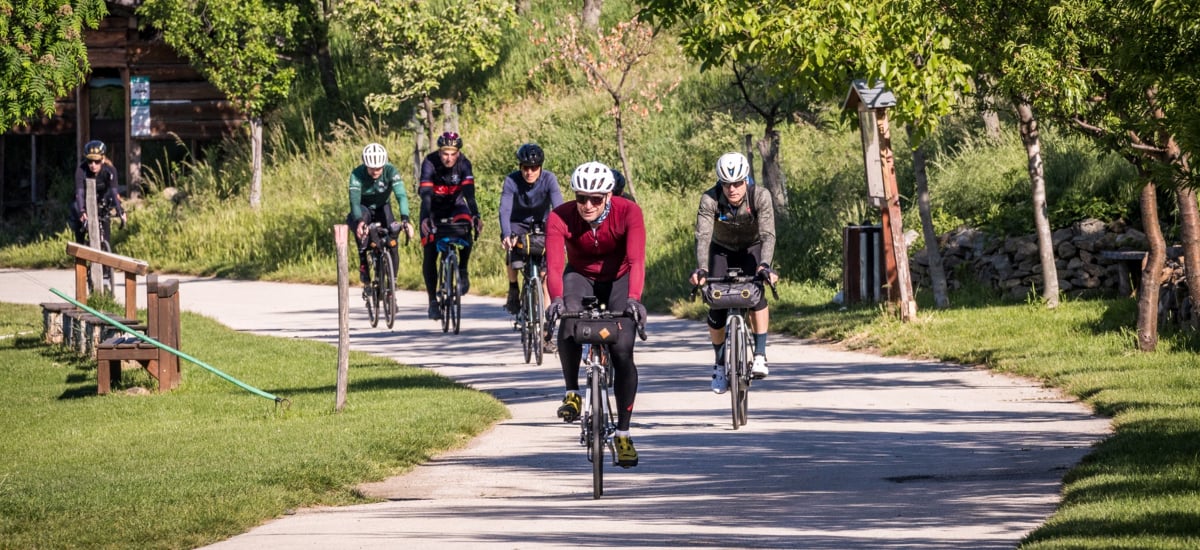
Unforgettable experiences, uncharted places, and nights under the stars—bikepacking brings all of these together.
Not 100 % satisfied with your new bike? It’s time to fine-tune it to your liking!

Out of all the bikes in the world, we're going to pick the perfect one for bikepacking. What features should it have?

 arrow_outward
