
































































A Pro Mechanic’s 4 Bike Tips: Servicing Prototype Bikes
What are the biggest mistakes everyday cyclists make that unknowingly damage their bikes and waste money? An experienced expert shares the answers.
We took a look behind the scenes of the Orbea Factory Team. Emil, the personal mechanic of cycling star Simon Andreassen, revealed how bike servicing works in a professional team and shared tips on how to keep your bike in like-new conditionl. Without expensive chemicals or spending hours in the garage or at a service shop.When packing for a race, how many spare wheels or frames do you take for each rider?
For World Cup events, each rider usually has two bikes. One for training and one for racing. In addition, we bring spare frames. Fortunately, two of our riders use the same frame size, while the women ride different sizes. So we usually pack two spare size-L frames, one M, and one S.
As for wheels, each rider has four wheelsets. One set is on the race bike, one on the training bike, and we carry at least two spare sets as well.

Do you make any custom modifications to the race bikes—parts you machine yourselves or components that aren't available in regular stores?
Definitely. First of all, this weekend Simon (note: Emil is Simon Andreassen’s mechanic) is racing a complete prototype. It’s an Orbea bike prototype on which we’re testing features that may appear on future models. Maybe some of them won’t make it into production, but we’re here at the races to see how they perform in real-world conditions.
If you want to develop a race bike, you have to race it. So, in a way, almost everything on this bike is custom.
Slightly used but properly maintained components oftentimes perform better than brand-new ones.Normally, Simon rides with a modified dropper-post remote. He uses an electronic Fox dropper, and there isn’t a right-hand lever available for it. However, he prefers operating the dropper with his right hand so that he can control the suspension lockout with his left at the same time. That way, when he crests a climb and immediately enters a descent, he can open the suspension and lower the seatpost in a single motion. That’s one of my personal projects.
He also rides a modified Shimano XTR drivetrain that I’ve tuned precisely to his preferences.
Which components suffer the most during races?
Simon is actually quite gentle on his equipment. He rarely breaks or damages anything because his riding style is very smooth and controlled. But across the team, the biggest weak point last season was the wheels. The rims and tires take the most punishment.
How often do you replace the tires?
Simon gets a fresh set of tires for every World Cup race. Every. Single. One. We usually mount them early enough for him to complete at least one training session beforehand.
This helps wear off the slippery mold-release compound left over from manufacturing. It also gives us a chance to make sure the sealant is working properly. We like to leave the tires overnight, so I inflate them, check that they hold pressure, and then Simon rides at least one training session on them before the race.
So you have to mount the race tires a day in advance?
Yes. The day before the race, he has to ride on the exact set of tires he'll be racing on. I never mount brand-new tires right before the start—unless the weather suddenly changes and we find ourselves saying, “Damn, we need to switch to wet-weather tires.”


What do you replace before each race? Which components—cables, bearings, or something else?
To be honest, we don’t replace bearings very often. We use Enduro bearings, and their ceramic bearings are excellent. Most of the time, it’s enough to clean and lubricate them, and they run smoothly again, almost like new.
As for chains, for every race weekend, I install a freshly waxed chain on Simon’s bike. He rides it during the week, and before the race, we re-wax it so it’s in perfect condition.
We don’t replace any major components before races. If there’s still enough material left on the brake pads, it’s better to leave them alone. Properly bedded-in brake pads perform better than brand-new ones, so unless they’re completely worn out, I don’t touch the pads or rotors. Once they’ve settled in, they provide better braking performance than when they’re new.
Of course, we carry a huge number of spare parts, but in this respect, the World Cup scene can be incredibly wasteful.

Sometimes a lot of parts get replaced even though they still have plenty of life left in them. I try to get the maximum performance out of every component and not throw things away simply because everything is expected to be brand new. In fact, it often seems to me that slightly used but properly maintained components perform better than brand-new parts straight out of the box.
A chain that has been broken in, ridden for a week, and then re-waxed has significantly less resistance than a new chain taken directly from its packaging. The same goes for brake pads. Once they've gone through a few heat cycles, they simply offer better bite and more consistent braking performance.
What about electronic shifting? Has it been a blessing for you as a mechanic?
Definitely. First of all, it eliminates one cable from the headset, so we don't have to route as many cables, which is great. More importantly, if something happens during a race, we can replace the derailleur immediately without having to reroute any cables. You simply install the new derailleur, pair it with the shifter, and you're ready to go.
The shifting itself is also much faster. It's more reliable because cable friction inside the housing is no longer a factor. You press a button, and it shifts.
And what about that prototype bike? You probably can’t tell me much about it, but do you see it as a major evolution or more of an improvement on the current model?
I can’t say much about the prototype, but I can tell you it’s incredibly fast. Right now, we’re in the testing phase, evaluating new ideas and technologies. Some of them may eventually make it to market, but there are no guarantees.
It’s entirely possible that we’ll discover something that works better than our current solutions. Our goal is to make sure that any product that reaches customers is fully refined, thoroughly tested, and optimized.
Chain waxing is one of the best things a recreational rider can do.That’s our job. We want to make sure that when you buy an Orbea bike, it has been tested in every possible condition and represents the best bike we can build at that moment. The engineers listen closely to our feedback as well. Simon and I work very closely with the engineering team on the development of not only this bike, but future models too.
What about 32-inch wheels? Do you have any prototypes?
Sure, there’s been plenty of discussion about 32-inch wheels. However, we’re still evaluating them and aren’t completely convinced yet.
At the moment, you won’t see any 32-inch wheels here with us. All the major bike brands are currently focused on 29-inch wheels, and in our opinion, the twenty-niner is still the fastest option available today. But we'll see what the future brings.
What was the most heart-stopping moment when someone came to you five minutes before the start and said, “It’s not working”?
That happened to me last year in Lenzerheide. I was waiting for Simon at the start line when he arrived and said, “My lockout isn’t working—the rear shock won’t lock out.” I replied, “I can fix it, but do you really want me to start working on it now?”
At first, he said, “No, no, it’s fine.” He rode off a little way, then came back. I could see from his expression that he wanted me to fix it. Our team manager, Fran, was standing there as well.
I said, “Fran, hold this bike for me.” Since Simon and I had been speaking Danish the whole time, Fran had no idea what was going on. So he simply held the bike while, all of a sudden, I started removing the rear shock.
I managed to tighten the cable, reinstall the shock, and Simon went out for a quick test ride. By the time he came back, they were already calling riders to the start line. It really came down to the last few seconds. It was stressful, but we got it done.


I have a few questions about your tips for amateur riders. If you had to pick one thing that recreational cyclists neglect the most, what would it be?
Suspension—specifically, regular servicing of the fork and rear shock. First of all, it helps you avoid having to replace your fork or shock because the stanchions wear down over time.
But more importantly, the feeling of riding freshly serviced suspension is incredible. This is one of the areas where riders can gain the most. Smooth, properly functioning suspension simply transforms the ride.
It also saves money, because suspension components are among the most expensive parts of a bike. Regular servicing can save you a significant amount of money on damaged components while also improving your performance on the trail.
 Reneks2
 FeroT
FeroTYou mentioned chain waxing. Is it for everyone? Or is it enough for hobbyists to simply lubricate the chain with oil?
We’re very fortunate to be sponsored by Silca. I’d say that chain waxing is one of the best things a recreational rider can do to make bike maintenance easier. Your chain will last longer, run more smoothly, and stay free from that constant layer of black grime.
When your chain is clean, washing your bike becomes much easier as well. I no longer use any degreasers or harsh chemicals on chains. We clean them using only hot water, yet they remain dry, smooth-running, and clean.
What’s more, Silca has made the waxing process incredibly simple with products like their StripChip additive. You can take a brand-new chain straight out of the box, drop it into melted wax, and pull out a fully prepared waxed chain.
Of course, we use their race-specific wax, Speed Wax, to eliminate every last fraction of friction, but for most riders, I would wholeheartedly recommend StripChip.
You simply take a new factory-fresh chain, place it in a pot of melted wax, remove it, follow Silca’s instructions, and you end up with a perfectly waxed chain. No cleaning, no complicated process—just a simple and effective solution.

What about tire pressure? That’s an eternal topic.
It’s very individual, but I often see recreational riders running much higher tire pressures than we use here. That said, a lot of it comes down to riding technique. You need to learn how to ride with lower pressures without damaging your equipment.
I understand that nobody wants to destroy their wheels, but when you reduce pressure to the right level, you gain more grip, accelerate more efficiently, lower rolling resistance, and improve comfort on the bike. After all, the tire is your first line of suspension.
What do you consider low pressure?
We typically run between 1.0 and 1.3 bar. It’s not an extreme setup, but it’s definitely on the low side. We also use very soft tires, so I think if most riders used our tires and ran the same pressures, they’d probably end up damaging their rims.

One last question: Do you have any ultimate “life hack” that could save recreational riders time? We’ve already talked about chain waxing, but is there anything else?
I’d actually mention something that won’t necessarily save time, but will save money. If your bike isn’t completely covered in mud, the less water you use to clean it, the longer your bearings will last. This weekend, for example, the conditions were dry, so I washed the tires, but I didn’t use water on the bike itself.
We use special cleaning wipes from Silca (Gear Wipes). They’re pre-soaked with a cleaning solution, so I can simply wipe down the frame and clean all the crevices and hard-to-reach areas to remove dust and dirt.
The less you wash your bike with water—especially with a pressure washer—the longer your bearings will continue to run smoothly and perform properly. In the long run, that means less maintenance and fewer repairs.
And there’s another advantage: when you wash a bike with water, you have to wait for it to dry before applying products such as liquid wax.
Emil, thank you for all the information and advice. We’ll be cheering for you and Simon in the races ahead.


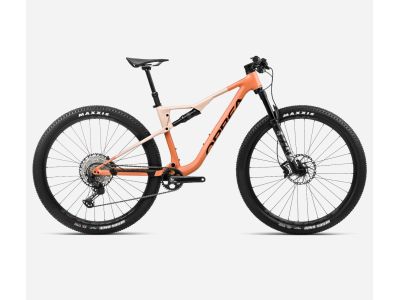
Clearance -23% Orbea OIZ H10 29 bike, apricot orange/limestone beige
2,849 €
-23%
RRP 3,699 €

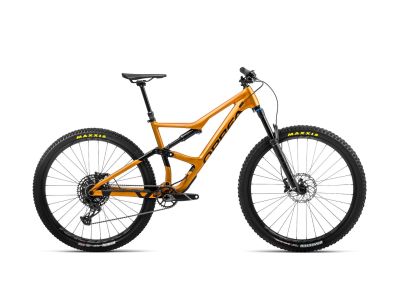

New model -20% Orbea ALMA M50 29 bike, diamond carbon view
from 1,599 €
-20%
RRP 1,999 €

 arrow_outward
