



































































Saddle Comfort: Anatomy Matters — Measure Your Sit Bones
Every June, at the height of cycling season, forums echo with the same complaint: “After 50 km, my butt hurts. I can’t sit down. I need a softer, gel saddle.”
While this reasoning may seem intuitive, it is fundamentally flawed from the perspective of biomechanics and human anatomy. In the vast majority of cases, overly padded saddles are the primary cause of even more serious problems.The secret to riding long distances without sit bone pain does not lie in thick saddle padding. The real key is choosing the correct saddle width. The saddle shell must precisely match the distance between your sit bones (scientifically known as the ischial tuberosities).
Let's explore the science behind saddle selection and look at a simple method for accurately measuring the correct saddle width from the comfort of your home.


Anatomical Fact: What happens when the saddle doesn't fit the body
When you sit on a properly fitted saddle, the entire weight of your torso is supported exclusively by your sit bones. These bony protrusions of the pelvis are surrounded by resilient connective tissue and are anatomically designed to withstand prolonged loads. In this ideal position, there is no compression of the surrounding soft tissues, blood vessels, or nerve networks in the perineal area.If the saddle width does not match your anatomy, two problematic conditions can occur:
- The saddle is too narrow: The sit bones literally extend beyond the edges of the saddle shell and lose proper support. As a result, the rider’s entire body weight is transferred to the soft tissues in the center—the prostate in men or the labia in women. This can lead to acute ischemia, tingling, numbness, and, over time, urological or gynecological complications.
- The saddle is too wide: This forces the rider to slide forward onto the narrow nose of the saddle, once again placing excessive pressure on the soft tissues. In addition, the wide edges can rub against the inner thighs (creating friction on the adductors) and restrict a smooth, circular pedaling motion.


Why is a giant gel saddle a trap?
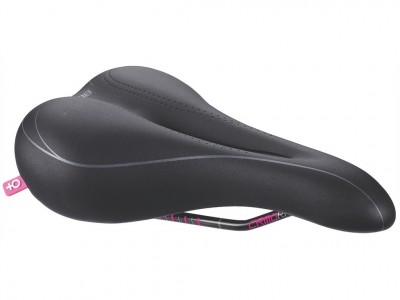
When you sit on a saddle that is too soft or heavily padded with gel, your sit bones sink deeply into the cushioning. For the first ten minutes, it may feel comfortable because there is less pressure on the bones. However, this is where the problem begins.As your sit bones sink into the saddle, the surrounding material is pushed upward between them. This creates continuous pressure on the pudendal nerve and the surrounding blood vessels. The result? After an hour of riding, the entire perineal area may begin to burn, tingle, or feel numb.


Home Measurement Guide (Corrugated Cardboard Method)
To determine the exact distance between your sit bones, you do not need to visit a professional bike-fitting studio. All you need is a piece of ordinary corrugated cardboard from an old box (or a piece of polystyrene foam), some chalk, and a ruler.- Prepare the surface: Place a piece of cardboard on a firm, perfectly flat, hard surface. A wooden chair, stool, or step is ideal. A soft sofa or padded chair is unsuitable, as it will distort the depth of the impression.
- Simulate your riding position: Sit on the cardboard wearing only your underwear. To apply maximum pressure and accurately replicate your riding posture, lift your feet off the ground (for example, by balancing on your toes or slightly drawing your knees toward your chest). Grip the underside of the chair with your hands and pull your entire torso weight down into the cardboard. Remain in this position for approximately 10–15 seconds.
- Identify and mark the centers: After standing up, you should see two distinct circular indentations in the cardboard. If they are difficult to identify, lay a piece of chalk flat against the surface and lightly rub it across the cardboard—the indentations will remain darker than the surrounding area. Using a marker, mark the exact center (the deepest point) of each indentation.
- Calculate the final saddle width: Using a ruler, measure the distance between the two marked centers in millimeters. To this measurement, add a fixed allowance based on how aggressively you lean forward on the bike:

 filipskalican
 P.R.
P.R.
 youtubetomasmartinak

💡 Example: If you measure a sit bone spacing of 115 mm and ride an XC mountain bike with a moderately aggressive riding position, your ideal saddle width would be 115 + 15 = 130 mm. You would then choose a saddle with a nominal width of approximately 130–135 mm, depending on the manufacturer’s specifications.


Construction Details: Central Cut-out and Saddle Shape
The shell width is the primary consideration, but it is not the only parameter to take into account. When choosing a saddle, also consider its longitudinal profile.Flatter saddles are suitable for riders who frequently change position during a ride, moving forward on climbs and backward on descents. Curved saddles, with a raised rear section, on the other hand, help keep the pelvis securely in one position, which is appreciated by endurance road cyclists and marathon riders.
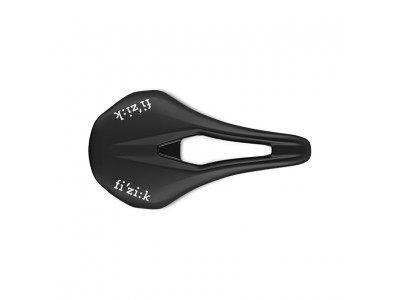
A central anatomical cut-out (often referred to simply as a “cut-out”) is now standard on many modern saddles. It can significantly reduce pressure on the soft tissues, but remember: if you choose a saddle that is too narrow, even the largest central cut-out will not prevent excessive pressure on the perineal area, because the sit bones will still extend beyond the edges of the saddle.

Investing in a new saddle without measuring beforehand is a lottery with an extremely low chance of winning. Measure your sit bones, forget about excessive gel padding, and look for a saddle that combines appropriate stiffness with geometry that precisely supports your anatomy.
Your body will thank you on your next hundred-kilometer ride.
Photo source: editorial archive
Similar articles
 PR article
There are bike components that are affordable, easy to replace, and can still make a significant difference to your riding experience.
 PR article
You don’t need to explain your passions when your outfit speaks for itself. Discover eight versatile pieces, from a waterproof suit to a cap, that transition seamlessly from the trail to the city.
How do you navigate the vast selection of rims, wheels, and tires? Will you choose aluminium or carbon, inner tubes, or even tubulars?

 arrow_outward
