


























































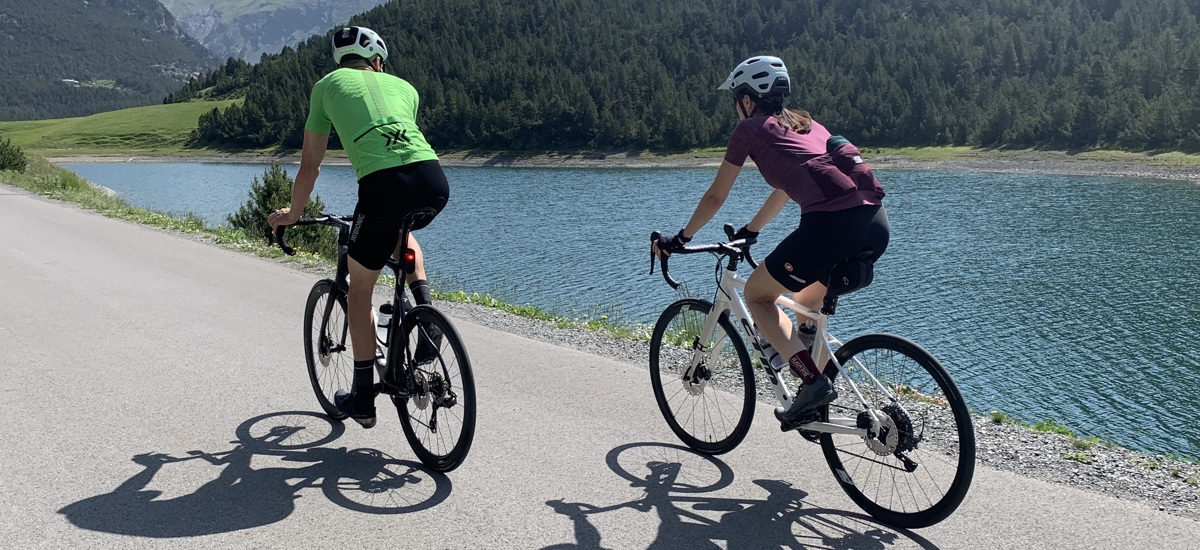
Gravel, Road, or Trekking Bike – What does each offer?
A road bike is built for speed on asphalt. But can a gravel or trekking bike deliver similar—or perhaps equally satisfying—performance?
On one side, we have the pure speed of a road bike; on the other, the versatility and adaptability of a gravel bike. Completing the trio is the trekking bike, which occupies a category of its own.
So, which type of cyclist is best suited to each bike?
Gravel – A World of Simplicity and Versatility
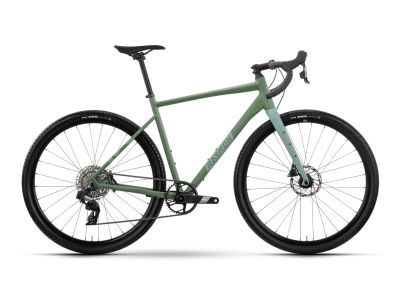
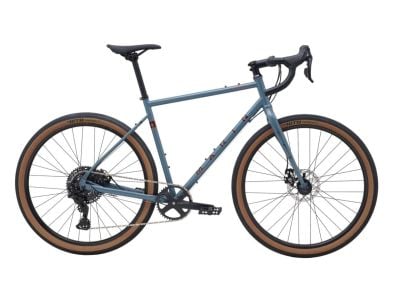
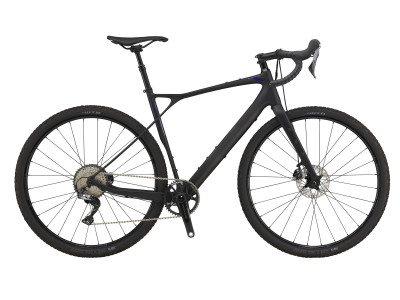
Let’s begin by looking at who might benefit more from a gravel bike than from a road bike. Some cyclists aren’t obsessed with perfectly smooth asphalt and occasionally enjoy taking shortcuts along rough roads or unpaved sections. For some, wider road tires are enough.

However, if you don’t intend to tackle demanding off-road terrain and want a single bike that can do almost everything, a gravel bike may be the ideal solution. Its greatest advantage over a road bike is that you’re not restricted to asphalt. Compared with a mountain bike, you can also expect lower weight, better aerodynamics, and simpler maintenance.
The equation is straightforward: the more moving parts a bike has, the more maintenance it requires—and the more things can potentially go wrong.
Modern gravel bikes are also increasingly borrowing features from mountain bikes. Various elastomer-based damping systems and advanced frame engineering improve comfort, while some models even allow the installation of a suspension fork or dropper post. At that point, though, we begin to drift away from a direct comparison with road bikes. 🙂


The versatility of a gravel bike is further highlighted by the fact that all you need is a second wheelset fitted with narrower tires, and suddenly it feels like you own two bikes. Compared with most road bikes, gravel bikes also provide a more upright riding position.
This is particularly appealing to long-distance riders who would rather not deal with neck or back pain after spending several hours in the saddle.
Choosing the right gearing can be another consideration. Road bikes typically use a double chainring at the front and a cassette with 8–12 gears. Gravel bikes, by contrast, often offer the option of a single front chainring paired with a wide-range cassette.
A perfect example is the Shimano GRX groupset. If most of your riding takes place on flat terrain, dirt roads, or gravel tracks, a single chainring is often the logical choice. A double chainring, however, comes into its own in hilly terrain, where it provides a broader gear range. Well, at least until you become Primož Roglič or Jonas Vingegaard. 🙂
A gravel bike can also be an excellent option for road-oriented bikepacking adventures and races. Its frame is generally better suited to carrying various bags, with mounting points commonly found on the frame and fork, while the handlebars and seatpost can also be used for luggage.


A Trekking Bike – Ideal for the Recreational Rider
Although trekking bikes have become somewhat less prominent in recent years, they remain practical everyday bicycles with plenty to offer. I started cycling on a trekking bike myself, and I’m certainly not the only one.In some ways, a trekking bike can be viewed as a more affordable alternative to a gravel bike.
Unlike gravel and road bikes, which are also designed for sporty riding, a trekking bike is better suited to recreational cyclists without particularly ambitious performance goals.
No demanding terrain. No thousands of metres of climbing. Instead, you get a wide range of gears that can be a huge advantage for less experienced or less fit riders.
Another key difference lies in the handlebars. While road and gravel bikes typically use drop bars, trekking bikes continue to rely on flat handlebars. Although this sacrifices some aerodynamic efficiency, it offers more intuitive handling and control.


In addition, trekking bikes are often equipped with racks, lights, or at least mounting points for them. In short, they are equally at home on the daily commute as they are on a relaxed Sunday ride along paved roads.
Cross bikes can sometimes be confused with trekking bikes. However, they are generally closer to hardtail mountain bikes, featuring wider tires and, in most cases, a suspension fork.
Which is right for you?
Ultimately, the most important question is: which bike best matches your needs? Here’s a simple breakdown:Road Bike:
- If you enjoy sporty, performance-oriented riding
- If you want maximum aerodynamic efficiency
- If you already own a mountain bike
Gravel Bike:
- If you want one bike that can do almost everything
- If you ride mainly on roads with occasional easy off-road sections
- If you plan to go bikepacking
- If you occasionally want to escape traffic and explore quieter routes
Trekking Bike:
- If you mainly ride shorter, less demanding routes
- If you have a limited budget
- If versatility and practicality are your top priorities
- If you want the same ability as gravel bikes to avoid busy roads when possible
In future articles, we’ll take a closer look at additional equipment and share some practical riding tips.
Photo source: editorial archive
Similar articles
While it may not be immediately obvious, road bikes come in several subcategories. So how do you choose the right one?
The selection is vast, prices vary widely, and the number of cycling glasses available seems endless. How do you make sense of it all and choose the right pair?
 PR article
Summer invites adventure, both on and off-road, and gravel bikes are the ideal companion. Here's eight tips for useful gear and interesting accessories.

 arrow_outward
